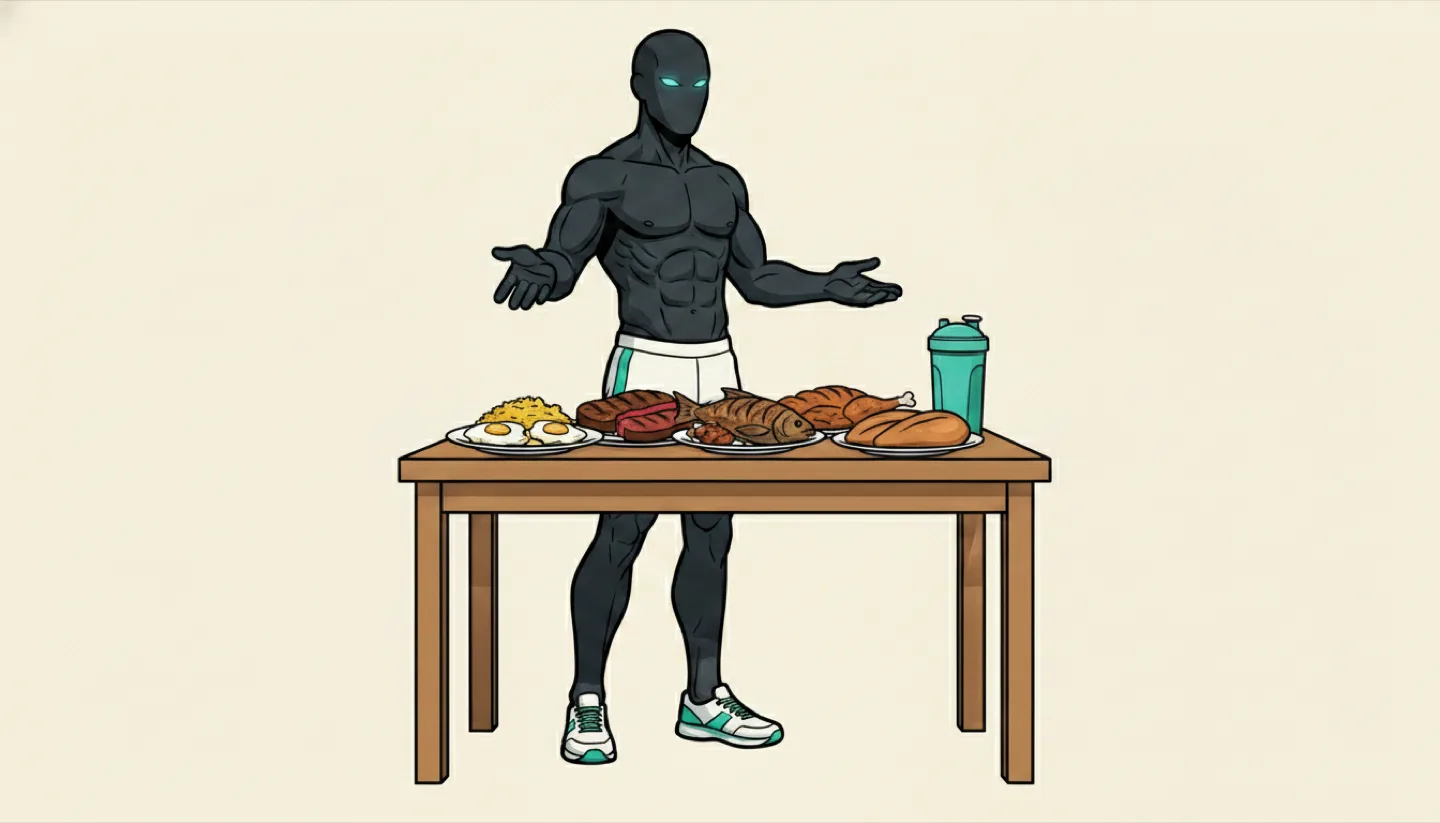
How to preserve muscle on GLP-1 comes down to three levers you control while the medication does the appetite work: eat high protein (1.6-2.2 g per kg of body weight, leaning toward the top end), do resistance training 2-3 times a week, and keep your calorie deficit moderate, not a crash. This matters because on Ozempic, Wegovy, or Mounjaro a large share of the weight you lose — often cited at ~25-40%, and as high as ~45% in some trials — can come from lean mass rather than fat if you do nothing to defend it. The medication drives the weight loss; protein and lifting decide whether that loss is mostly fat or partly hard-earned muscle. This guide gives you the target table, the reasoning behind each number, and how to actually hit high protein when the drug has killed your appetite. It is not medical advice — coordinate any plan with the prescriber managing your treatment.
How to Preserve Muscle on GLP-1: The Four Levers at a Glance
How to preserve muscle on GLP-1 is not one trick — it's four levers pulling in the same direction. The medication (semaglutide in Ozempic and Wegovy, tirzepatide in Mounjaro and Zepbound) suppresses appetite so hard that most of the muscle-loss risk comes from under-eating protein and under-stimulating your muscles, not from the drug itself. Pull these four levers and you shift the composition of your weight loss heavily toward fat. Here are the targets:
| Lever | Target | Why it protects muscle |
|---|---|---|
| Protein | 1.6-2.2 g per kg body weight/day (lean toward 2.0-2.2 in a deficit) | Supplies the amino acids to rebuild muscle; blunts the breakdown that a calorie deficit accelerates. |
| Resistance training | 2-3 sessions/week, all major muscle groups, 2-3 sets of 6-12 reps | Sends the "keep this tissue" signal. Without it, the body has no reason to spare muscle in a deficit. |
| Deficit size | Moderate — target ~0.5-1% of body weight lost per week, not a crash | The faster you lose, the bigger the muscle share. A gentler deficit preserves more lean mass. |
| Daily steps / activity | 7,000-10,000 steps or equivalent daily movement | Adds fat-burning without the fatigue of hard cardio, and supports overall energy balance and health. |
Notice protein and lifting are the two heavy hitters — they are what the research consistently shows move lean-mass retention. Deficit size and daily activity are the supporting cast. If you only do two things, make them protein and resistance training. Always run your specific targets past your prescriber, especially if you have kidney concerns that change protein guidance.
Why You Lose Muscle on GLP-1 in the First Place
You lose muscle on GLP-1 medications for the same reason you lose muscle in any rapid weight loss — the body sheds whatever tissue it isn't being asked to keep. When calories drop sharply and you're not lifting, muscle is metabolically "expensive" tissue the body is happy to trim. This isn't a mysterious drug side effect; it's basic energy-deficit physiology, amplified by how effective these drugs are at cutting intake.
The numbers are real and worth respecting. In body-composition analyses of semaglutide trials, roughly 25-40% of total weight lost has been attributed to lean mass, with one widely cited STEP 1 exploratory sub-analysis landing near ~45%. Two things are true at once here:
- The risk is real. Left unaddressed, a meaningful chunk of your loss can be muscle, which hurts strength, metabolism, and long-term function.
- It's largely adaptive and preventable. Some lean-mass loss is normal and even expected when you get smaller (you need less muscle to move a lighter body), and the muscle-specific portion is exactly what protein and lifting are designed to protect.
The appetite suppression is the double-edged sword: it's why the drug works, and it's why protein — the most filling, most easily skipped macronutrient — is the first thing to fall off your plate. Defending muscle is really about defending your protein intake and your training when eating feels like a chore.
Protein: The Number One Lever to Preserve Muscle on GLP-1
Protein is the single most important nutrition lever to preserve muscle on GLP-1, and it's also the one the medication makes hardest to hit. Aim for 1.6-2.2 grams of protein per kilogram of body weight per day, and lean toward the upper half of that range (roughly 2.0-2.2 g/kg) because you're eating in a deficit — higher protein is more protective when calories are low.
To make that concrete, for an 80 kg (176 lb) person that's about 128-176 g of protein per day, targeting the top means roughly 160-176 g. That is a lot of food when your appetite has been cut in half. Practical tactics that actually work on a GLP-1:
- Eat protein first. At every meal, start with the protein source before you fill up on anything else — you may only get a few bites in.
- Front-load earlier in the day, when appetite tends to be less suppressed than in the evening.
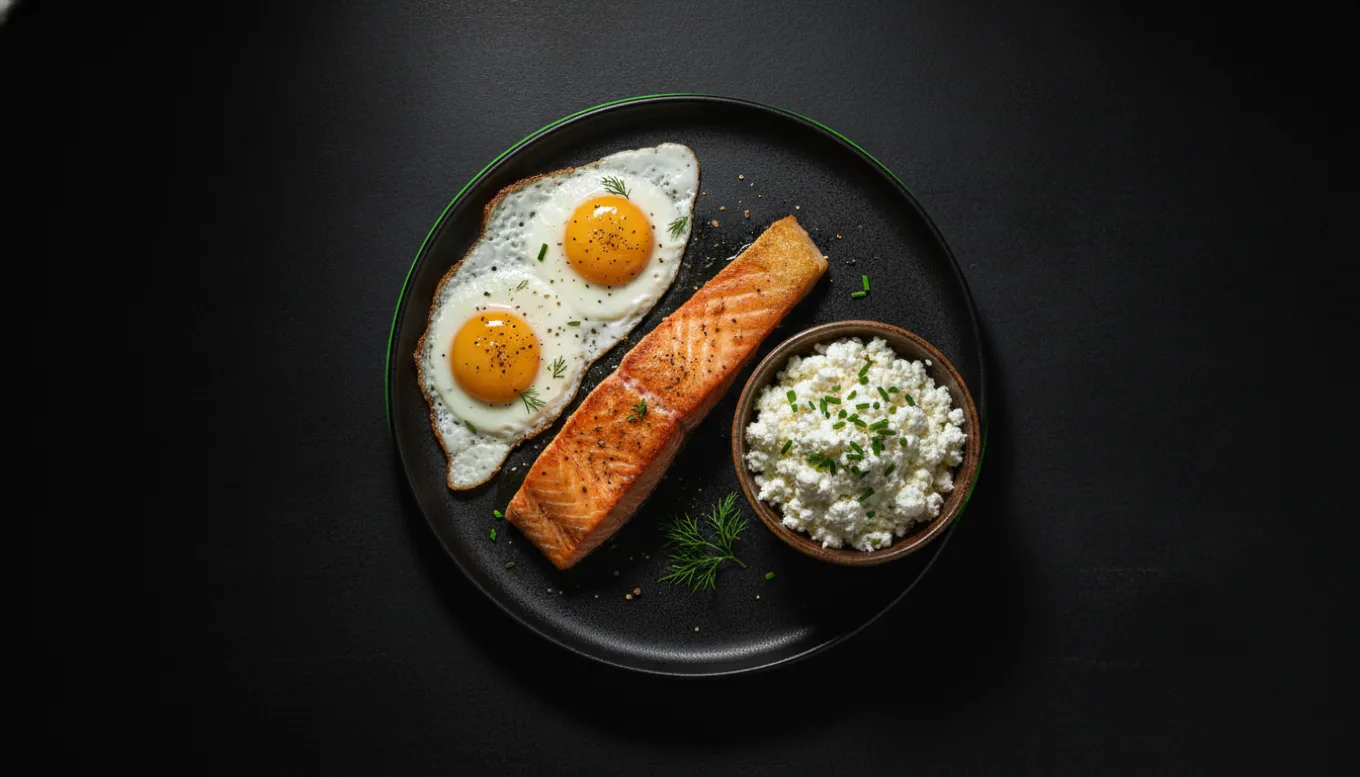
- Lean on liquid and easy protein: whey or protein shakes, Greek yogurt, cottage cheese, and protein drinks slip down when solid food feels impossible.
- Spread it across 3-4 feedings of 30-40 g rather than trying to cram it into one meal you can't finish.
- Use protein-forward convenience foods (bars, ready-to-drink shakes, deli meats) so a suppressed-appetite day still hits target.
If you have kidney disease or another condition that limits protein, this default range may not apply to you — this is a point to settle with your prescriber or a dietitian, not to guess at.

Resistance Training: The Signal That Tells Muscle to Stay
Resistance training is lever number two to preserve muscle on GLP-1, and it works alongside protein — the food supplies the raw material, the training supplies the reason to use it on muscle. Without a strength stimulus, high protein alone is far less effective; without protein, training alone is under-fueled. Together they're the proven combination. The evidence-based dose is simple:
- Frequency: 2-3 full-body or split sessions per week, hitting all major muscle groups (legs, back, chest, shoulders, arms, core).
- Movements: prioritize compound lifts — squats, deadlifts or hip hinges, presses, rows, lunges — that load the most muscle at once.
- Volume: about 2-3 sets per exercise, 6-12 reps, taken close enough to effort that the last couple of reps are genuinely hard.
- Progression: add a little weight, a rep, or a set over time. Progressive overload is what keeps the "retain this muscle" signal switched on.
You don't need to train like a bodybuilder. Two to three focused, progressive sessions a week is enough to dramatically shift how much of your weight loss comes from fat versus muscle. If you're new to lifting, deconditioned, or have joint or heart concerns, get cleared and ideally get a few sessions of coaching on technique first — going heavy with bad form on reduced energy is how people get hurt.
Deficit Size and Recovery: Don't Crash Your Way Down
The size of your calorie deficit is the third lever to preserve muscle on GLP-1, and it's a quiet one people overlook because the drug controls their appetite for them. The principle: the faster you lose weight, the larger the fraction that comes from muscle. A gentler, more moderate deficit lets you hold on to more lean tissue.
GLP-1 medications can suppress appetite so effectively that you accidentally end up in a severe deficit — eating far too little to support muscle or recover from training. Practical guardrails:
- Target a moderate rate of loss, broadly on the order of 0.5-1% of body weight per week rather than the fastest possible drop.
- Floor your protein even on low-appetite days — protein is the one macro you protect first when total intake falls.
- Don't stack a crash diet on top of the drug. The medication is already cutting your intake; a deliberate extreme cut on top compounds muscle loss.
- Prioritize sleep and rest between sessions — recovery is when muscle is actually repaired and retained.
If you're losing weight alarmingly fast, feeling weak, or unable to eat much at all, that's a conversation to have with your prescriber about dose and pacing — not something to push through.
Putting It Together: A Weekly Blueprint to Preserve Muscle on GLP-1
Here's how to preserve muscle on GLP-1 as an actual weekly routine rather than a list of principles. The goal is to make the four levers automatic so a low-appetite day doesn't derail you.
- Every day: hit your protein target first (aim high, 1.6-2.2 g/kg leaning up), spread across 3-4 feedings; get 7,000-10,000 steps of easy movement.
- 2-3 days/week: resistance train — full-body compound work, 2-3 sets of 6-12 reps, progressing over time.
- Weekly check: confirm your rate of loss is moderate (~0.5-1% body weight), not a freefall. If it's too fast, that's a prescriber conversation.
- Monthly-ish: track strength (are your lifts holding or climbing?) as a practical proxy for whether you're keeping muscle — strength maintained is muscle largely defended.
The mindset shift that makes it stick: on a GLP-1, your job isn't to eat less — the drug already handles that. Your job is to eat enough protein and train hard enough that the weight you lose is fat, not muscle. Everything in this guide serves that one reframe. And because individual needs, medications, and health conditions vary, treat these as evidence-based defaults to personalize with your prescriber or a registered dietitian — not a substitute for medical advice.
Common questions
How much protein should I eat to preserve muscle on GLP-1?
Aim for 1.6-2.2 grams of protein per kilogram of body weight per day, leaning toward the top end (around 2.0-2.2 g/kg) because you're in a calorie deficit. For an 80 kg person that's roughly 128-176 g daily. If you have kidney concerns, confirm your target with your prescriber first.
How much muscle do you lose on Ozempic, Wegovy, or Mounjaro?
Body-composition analyses suggest roughly 25-40% of total weight lost on GLP-1 medications can come from lean mass, with some trials reporting up to ~45%. Much of this is adaptive and preventable — high protein plus resistance training shifts most of the loss back toward fat.
Does resistance training really prevent muscle loss on GLP-1?
Yes. Resistance training 2-3 times per week is the key signal that tells your body to keep muscle rather than burn it in a deficit. Combined with adequate protein, it's more effective than diet or exercise alone at preserving lean mass while you lose weight on a GLP-1.
How often should I lift weights while on a GLP-1 medication?
Two to three resistance-training sessions per week, hitting all major muscle groups with compound lifts like squats, presses, rows, and hinges, at 2-3 sets of 6-12 reps. Progress the weight or reps over time. That's enough to meaningfully protect muscle; you don't need daily gym sessions.
Can I preserve muscle on GLP-1 if I can barely eat?
Yes, but you have to prioritize. Eat protein first at every meal, front-load earlier in the day, and lean on liquid protein like shakes, Greek yogurt, and cottage cheese when solid food feels impossible. If intake is so low you feel weak, talk to your prescriber about your dose and pacing.