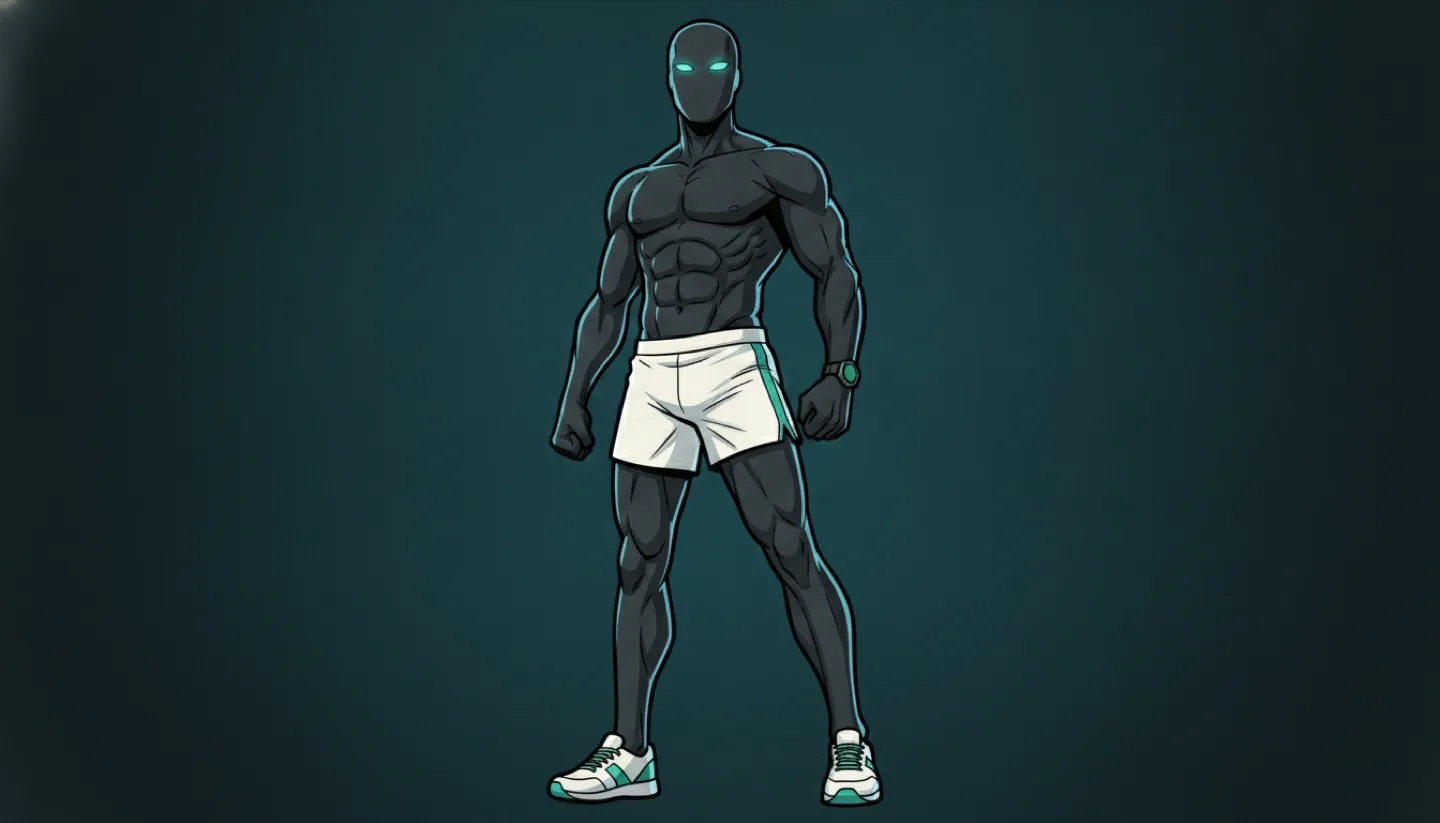
No gym, no weights, no excuse. You think you need a rack full of barbells to build a hybrid body — strong and conditioned, muscular and able to run all day. You don't. Your own bodyweight, the floor, and a single bar to hang from is a complete training system. The problem was never the equipment. It was the belief that without it, you can't train. Here's the no-gym hybrid system that builds real muscle and a real engine, anywhere on earth, with nothing but your body.
You need less than you think
You know the pattern. The gym's closed, or you're traveling, or life gets busy, so you skip. One skipped day becomes a week, the momentum dies, and you start from zero again. It's the all-or-nothing trap: if you can't do the full session, you do nothing. And nothing, repeated, is what actually kills your progress — not the missing dumbbells.
The lie you've absorbed is that muscle only grows under heavy iron. That bodyweight is "just cardio." It's wrong, and the science is clear. Muscle responds to tension and hard effort, not to the logo on the machine. A set of push-ups taken close to failure sends almost the same build signal as a bench press. Your muscles can't read the label on the resistance. They only feel how hard they had to work.
Here's what's actually happening under the hood. The main driver of muscle growth is mechanical tension — your muscle fighting hard against a resistance, especially in the stretched position, for enough hard reps. A barbell is just one convenient way to create that tension. Your bodyweight creates it too, as long as you make it hard enough: harder leverage, slower tempo, pauses, single-limb versions, and taking your sets close to failure. Get the tension right, and the muscle grows whether the load came from a plate or from gravity and a clever angle.
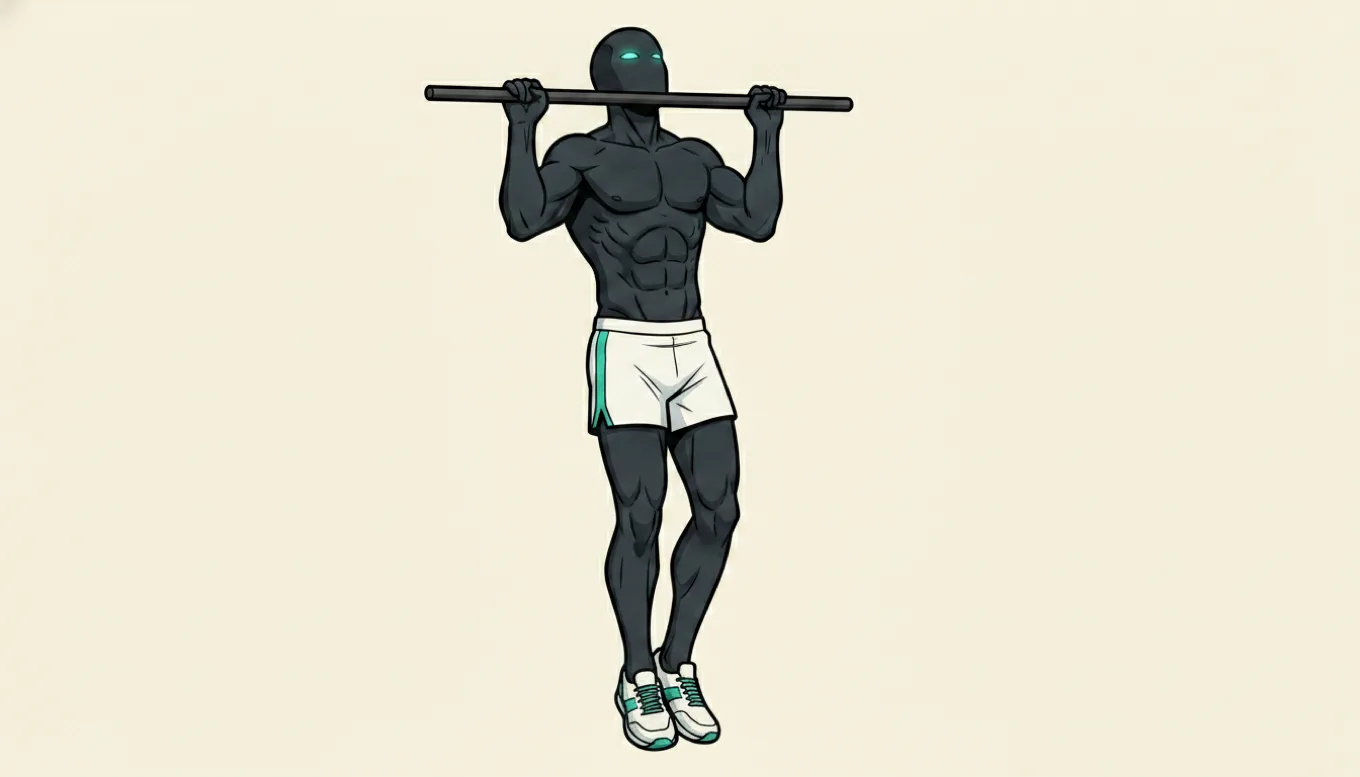
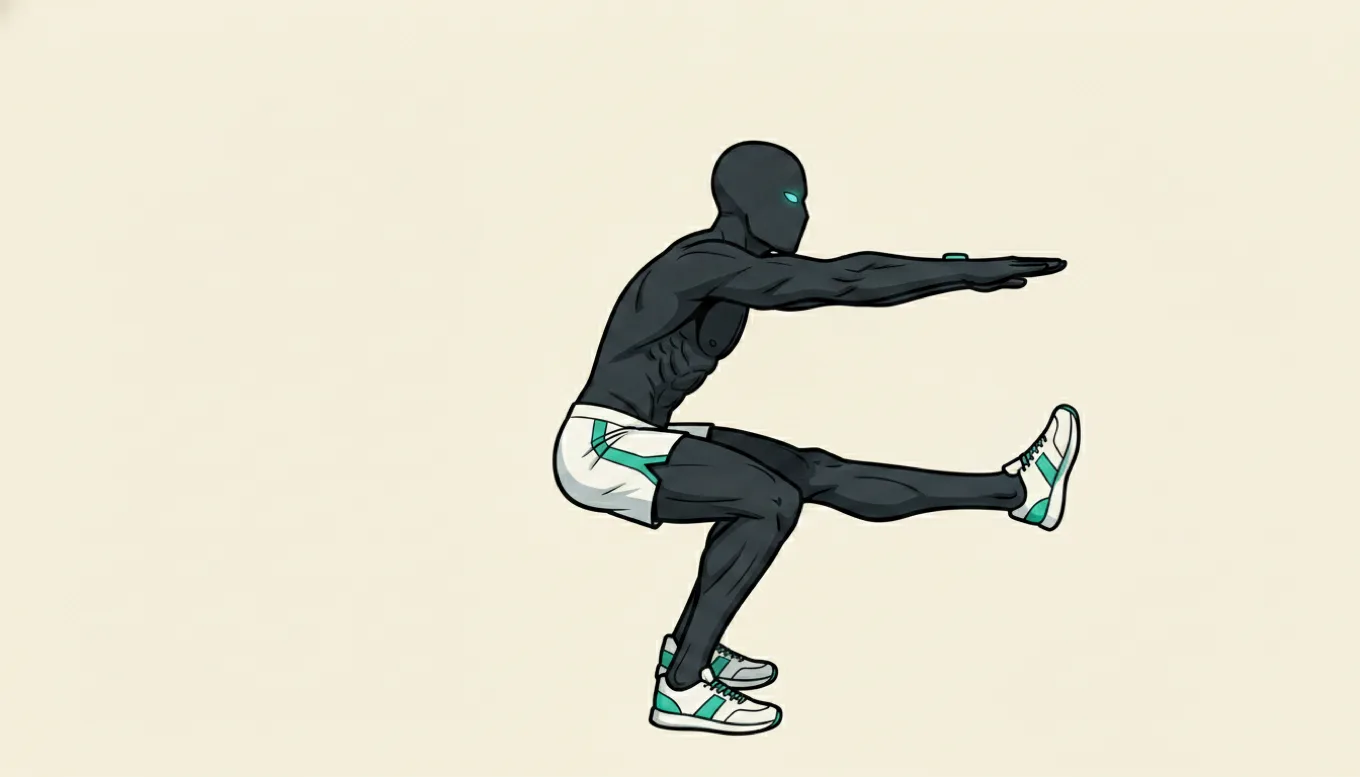
So let's build the strength side — the chassis. You only need five patterns. A push: push-ups, and when those get easy, elevate your feet, slow them down, or move to one-arm progressions. A pull: this is the one that needs a bar — pull-ups, or rows under a sturdy table, or a doorway bar. A squat: bodyweight squats, then split squats, then the pistol squat, a full one-legged squat that humbles almost everyone. A hinge for your hamstrings and glutes: single-leg Romanian deadlifts and hip thrusts off the floor. And core: planks, hollow holds, and leg raises. Five patterns, zero equipment except something to hang from, and you've covered the entire body.
Five moves that build real muscle
And here's how you keep progressing without ever touching a weight: the progression ladder. Every bodyweight move has easier and harder versions, and your job is to climb. Push-ups on your knees, then standard, then feet elevated, then archer, then one-arm. Squats, then split squats, then full pistols. Assisted pull-ups with your feet down, then strict, then with a loaded backpack, then one-arm work. When a variation gets easy, you don't add a plate — you climb to the next rung. That ladder is effectively endless, and it's exactly why advanced gymnasts are some of the strongest, most muscular athletes on earth, often without ever touching a barbell.
But here's the part people get wrong — they do bodyweight moves on easy mode and wonder why nothing changes. The secret is making them genuinely hard. Slow the lowering phase down to three full seconds. Add a pause at the bottom where it's hardest. Use one-and-a-half reps. Move to single-limb versions so each side carries the full load. And most importantly, take your sets close to failure — within a rep or two of failing. Twenty effortless push-ups build nothing. Eight brutal, slow, paused push-ups build muscle. It's not about the number. It's about the tension and the effort.
One more lever that's completely free: full range of motion and the stretched position. Muscle grows the most when it's loaded deep in the stretch, so go all the way — chest to the floor on push-ups, hips below the knee on squats, a deep loaded stretch at the bottom of every single rep. Half reps build half a body. The deeper and more controlled you go, the more growth you squeeze out of the exact same movement. Range of motion is free tension, and most people leave it on the table.
Now the engine side, and this is where bodyweight hybrid shines, because running needs no equipment at all. Three runs a week: one easy conversational zone-two run, one quality run, and one longer run. That alone builds a serious aerobic base. And if you want the conditioning of a HYROX athlete, string your bodyweight moves into circuits — burpees, mountain climbers, squat jumps, and lunges done back to back. Now you're training strength and your engine in the same session, with nothing but the ground.
Make bodyweight hard again
And there's a hidden bonus to training this way. Bodyweight work forces your whole body to stabilize, balance, and move as one connected unit, the way machines never do. You build coordination, joint control, and a springy athleticism that carries straight into your running and into real life. A pistol squat trains your knee stability better than any leg machine. A clean pull-up builds the back that holds your posture together at mile twenty. You don't just get strong — you get genuinely capable.
So here's the no-gym hybrid week. Two bodyweight strength days hitting all five patterns, hard, close to failure. Three runs — easy, quality, and long. And one optional conditioning circuit if you want extra engine. That's a complete hybrid program that fits in a hotel room, a park, or your living room. No membership, no commute, no excuses left.
Let me save you the mistakes. The first is going too easy — pumping out endless reps that never challenge the muscle. Push close to failure or it doesn't count. The second is being random — doing whatever you feel like with no progression. Track it: more reps, slower tempo, harder variation, week to week. The third is doing only the fun stuff and skipping pull work, which leaves you imbalanced and round-shouldered. And the fourth is treating it as a downgrade. Trained hard, bodyweight is not a backup plan. It's a complete system.
And the biggest advantage of all is simple: you'll actually do it. No commute, no waiting for a machine, no membership to guilt-trip you. The session that takes twenty minutes in your living room is the one that survives a busy week, a work trip, a newborn, a tight budget. Consistency beats the perfect program every single time — and nothing is more consistent than training you can do anywhere, any day, with zero setup.
Program it like a lifter
Full honesty — I learned this the hard way. I traveled for months with no gym access and was convinced I'd lose everything I'd built. So I leaned into hard bodyweight work and kept running, and I came back not just maintained, but stronger in ways the machines never trained — more control, more balance, a more athletic body. That stretch changed how I see training forever. The gym is a tool, not a requirement.
Now let me be honest about the limits. Pure bodyweight has a ceiling on maximal strength, especially for your pulls and hinges — at some point, lifting heavy external load will push your top-end strength and size further than gravity alone can. If your only goal is to be as big and strong as possible, you'll eventually want some weight. But for building a lean, strong, capable hybrid body that can run far and move heavy — for ninety percent of people, ninety percent of the time — your bodyweight is more than enough. The best workout is the one you actually do, and this one you can do anywhere.
And if all you've got is twenty minutes, here's a complete session: three hard rounds of push-ups, split squats, and rows, each taken within a rep or two of failure, then finish with five minutes of burpees and mountain climbers. Twenty minutes, no equipment, strength and engine in one shot. Do that three or four times a week, add your runs, and you've got a hybrid program most people with a full membership would envy. The barrier was never the gear. It was starting.

Common questions
Can you build muscle with just bodyweight and no gym?
Yes, bodyweight training builds real muscle because muscle responds to mechanical tension and hard effort, not to the type of equipment. A set of push-ups taken close to failure sends almost the same growth signal as a bench press.
What exercises do you need for a full bodyweight workout?
You only need five movement patterns to cover the entire body: a push (push-ups), a pull (pull-ups or rows), a squat (bodyweight to pistol squats), a hinge (single-leg Romanian deadlifts and hip thrusts), and core (planks, hollow holds, leg raises). The only equipment required is something to hang from for pulls.
How do you keep progressing with bodyweight training without weights?
You climb a progression ladder: every move has harder versions, so when one gets easy you advance to the next rung instead of adding weight. For example, push-ups go from knees to standard to feet-elevated to archer to one-arm, and this ladder is effectively endless.
How do you make bodyweight exercises hard enough to build muscle?
Make each rep genuinely hard by slowing the lowering phase to three seconds, pausing at the bottom, using single-limb versions, and taking sets within a rep or two of failure. Eight brutal, slow, paused push-ups build muscle while twenty effortless ones build nothing.
How many runs a week for a hybrid body without a gym?
Do three runs a week to build a serious aerobic base: one easy conversational zone-two run, one quality run, and one longer run. Running needs no equipment, making it ideal for a no-gym hybrid program.
Is bodyweight training enough or do you eventually need weights?
Bodyweight is more than enough to build a lean, strong, capable hybrid body for ninety percent of people, ninety percent of the time. However, pure bodyweight has a ceiling on maximal strength, especially for pulls and hinges, so if your only goal is to be as big and strong as possible, you'll eventually want external load.