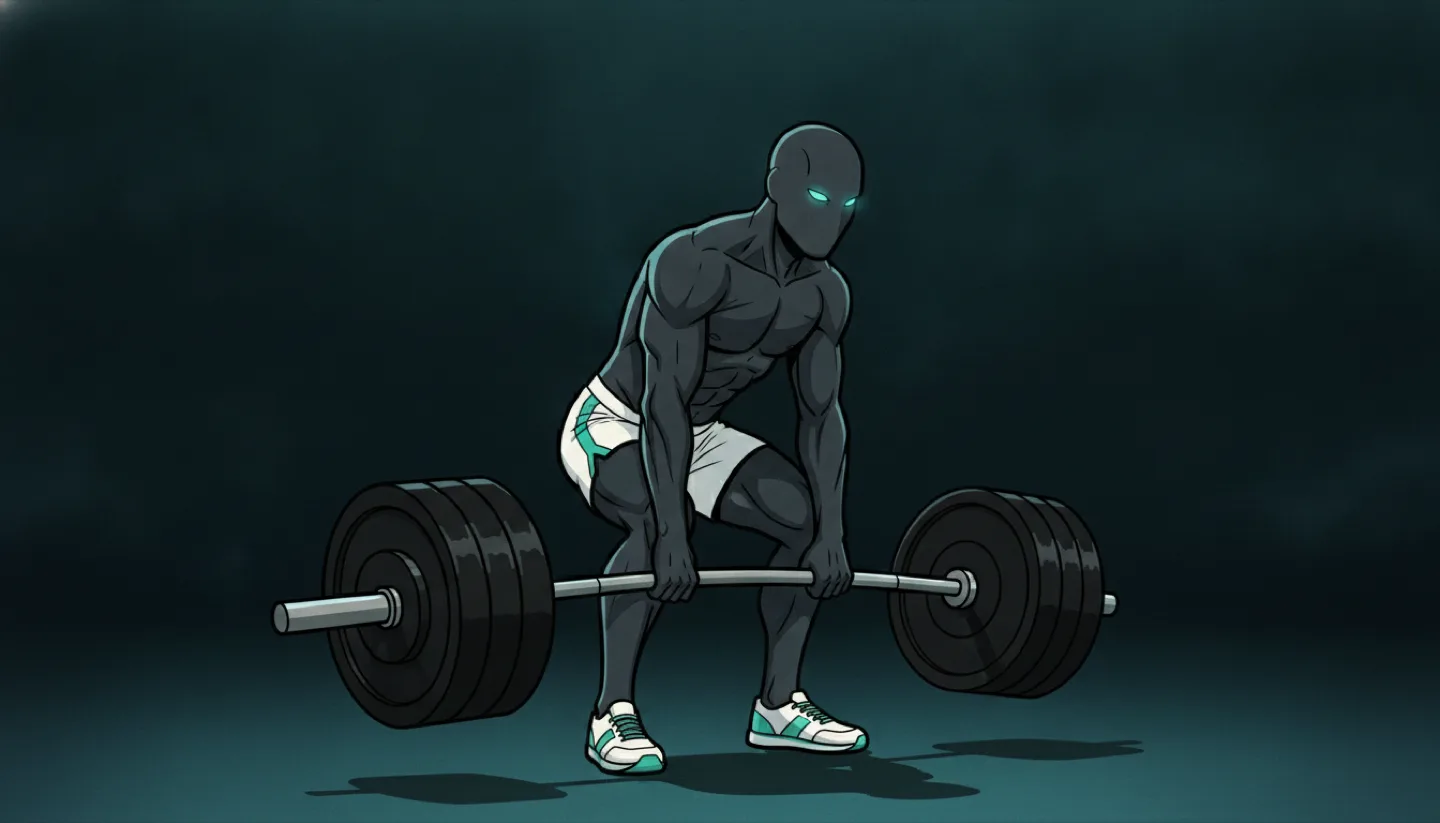
You think lifting will make you slow. Too bulky, too sore, too heavy to run. So you skip it, you just run more — and you keep breaking down. Shin splints, a cranky knee, an IT band that flares every time you build mileage. You hit a wall late in every race and your form falls apart in the last few miles. Here's what nobody told you: strength isn't the enemy of your running. It's the missing half of it. And the right kind of lifting will make you faster and far harder to injure, without adding a single pound you don't want.
Running alone breaks you down
You know the cycle. Something starts to hurt, so you rest it. It feels better, so you run again, and within two weeks it's back. You stretch, you foam roll, you buy new shoes. But the real problem was never flexibility. It was capacity. The tissue simply couldn't handle the load you kept asking of it, and no amount of stretching builds a stronger tendon.
The lie you've been told is that lifting makes runners slow and bulky. That a runner has no business under a barbell. It's completely wrong. You will not turn into a bodybuilder from two short strength sessions a week — that takes years of eating and training specifically for size. What you will build is stronger tendons, stiffer springs, and a nervous system that fires harder. None of that shows up on the scale. All of it shows up in your running.
Here's what's actually happening under the hood. Every stride is a tiny jump — you land, your muscles and tendons absorb the impact like a spring, and they snap back to launch you into the next step. The better that spring, the less energy each stride costs you. That's called running economy, and it might be the most important thing in distance running. Strength training stiffens the spring. Stronger muscles and tendons return more of that energy for free, so you hold the same pace at a lower cost. You don't get a bigger engine from lifting — you get a more efficient chassis.
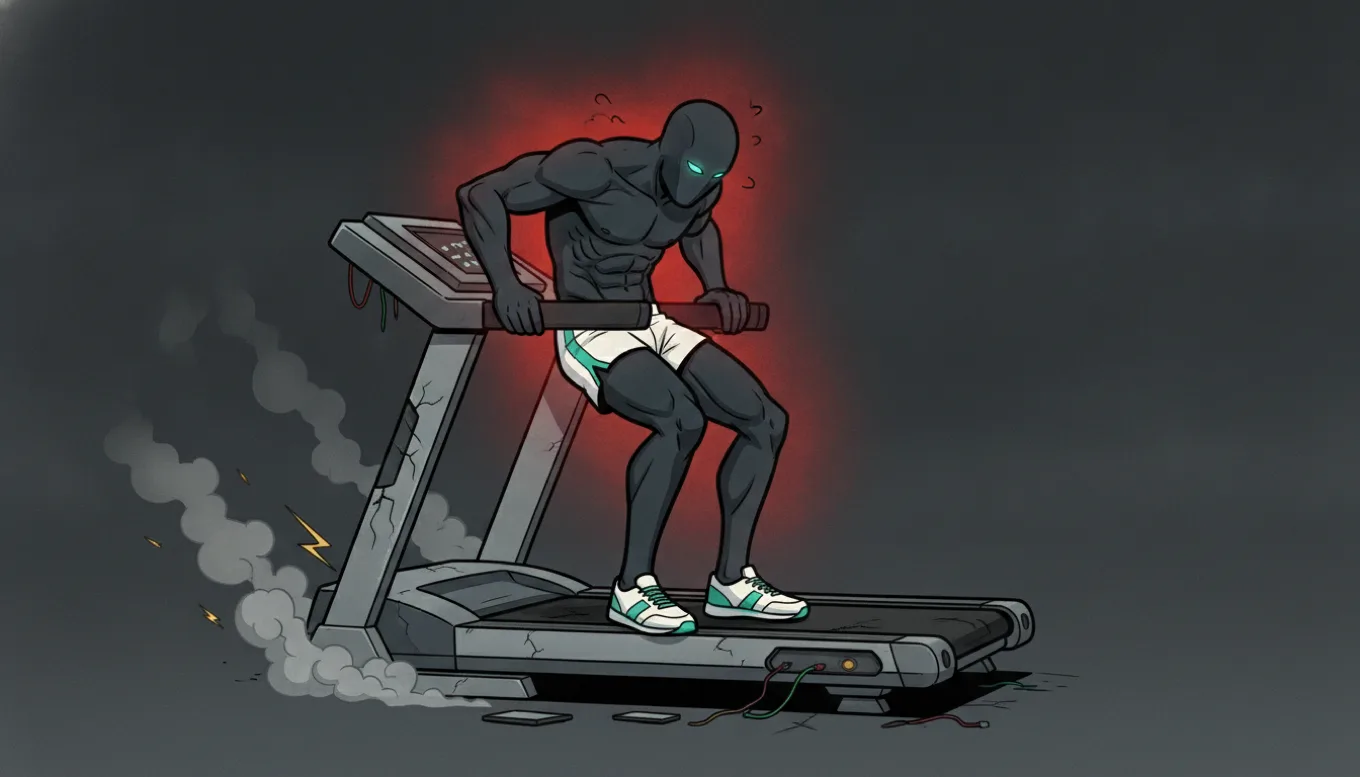
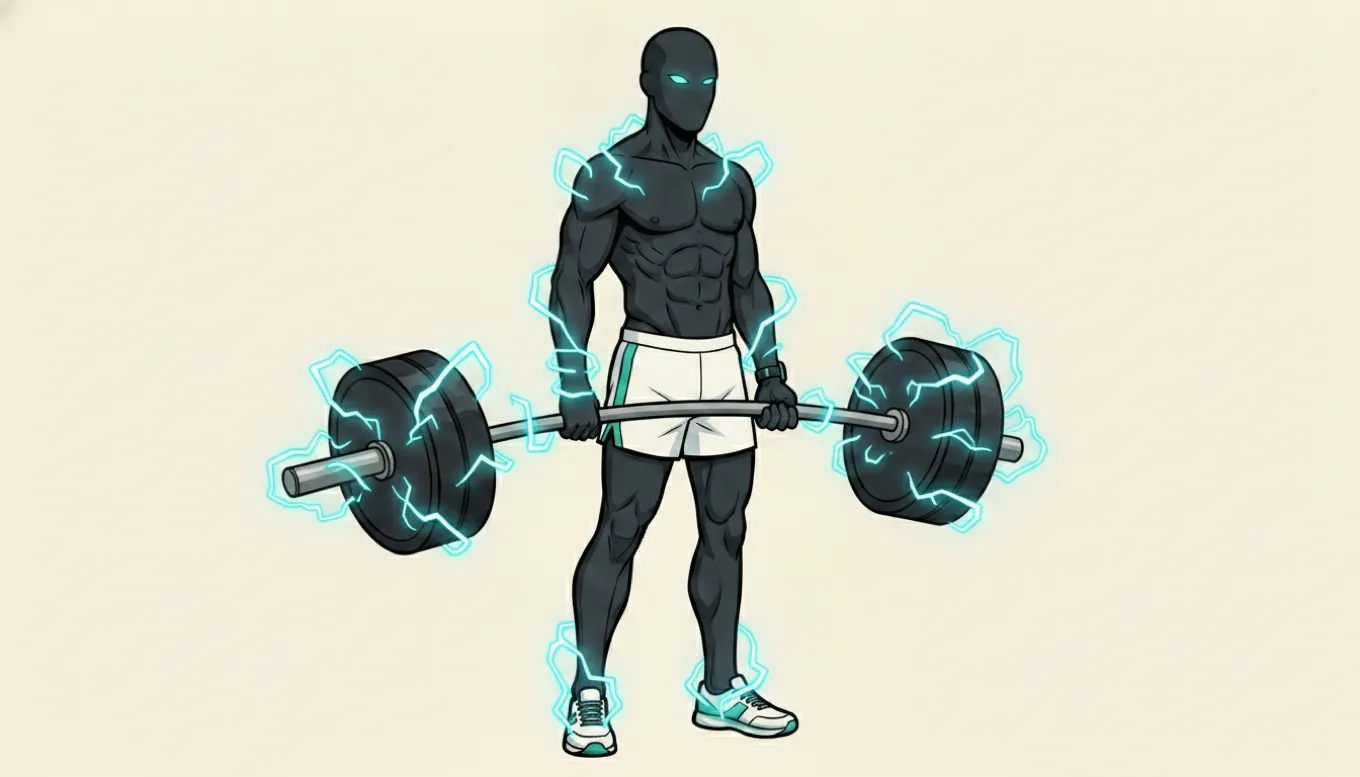
And there's a second payoff that matters even more: durability. The vast majority of running injuries aren't bad luck. They're a tissue that got asked to do more than it was built for. Strength training is how you build that capacity. Heavier, stronger muscles, tougher tendons, denser bones — all of it raises the ceiling on what your body can absorb before something gives. Lifting is the closest thing runners have to injury armor.
Strength is armor
And it compounds with age. Bone density, muscle mass, and tendon health all decline as the years stack up, and running alone doesn't protect them the way you'd hope. Lifting does. Every heavy set is a signal to your bones and connective tissue to stay dense and resilient. The strength you build in your thirties is the reason you're still running pain-free in your fifties. This isn't just about your next race. It's about being the sixty-year-old who still laces up while everyone else gave it up to bad knees.
Then there's the finish line. You know that feeling when your form falls apart in the last stretch — hips dropping, shoulders slumping, stride turning to mush. That's not your lungs quitting. That's your strength running out. Strong hips, a strong core, and strong legs hold your form together when you're exhausted, and that held-together form is free speed exactly when everyone else is slowing down.
But won't I be too sore to run? It's the biggest fear, and it's completely avoidable. Soreness comes from high-volume, pump-chasing, train-to-failure lifting. That's not what you need. You need to lift heavy for low reps and stop with a couple of reps in the tank. Heavy and brief trains your strength and your nervous system with surprisingly little muscle damage. Done right, you can lift hard and run the next day without your legs feeling trashed.
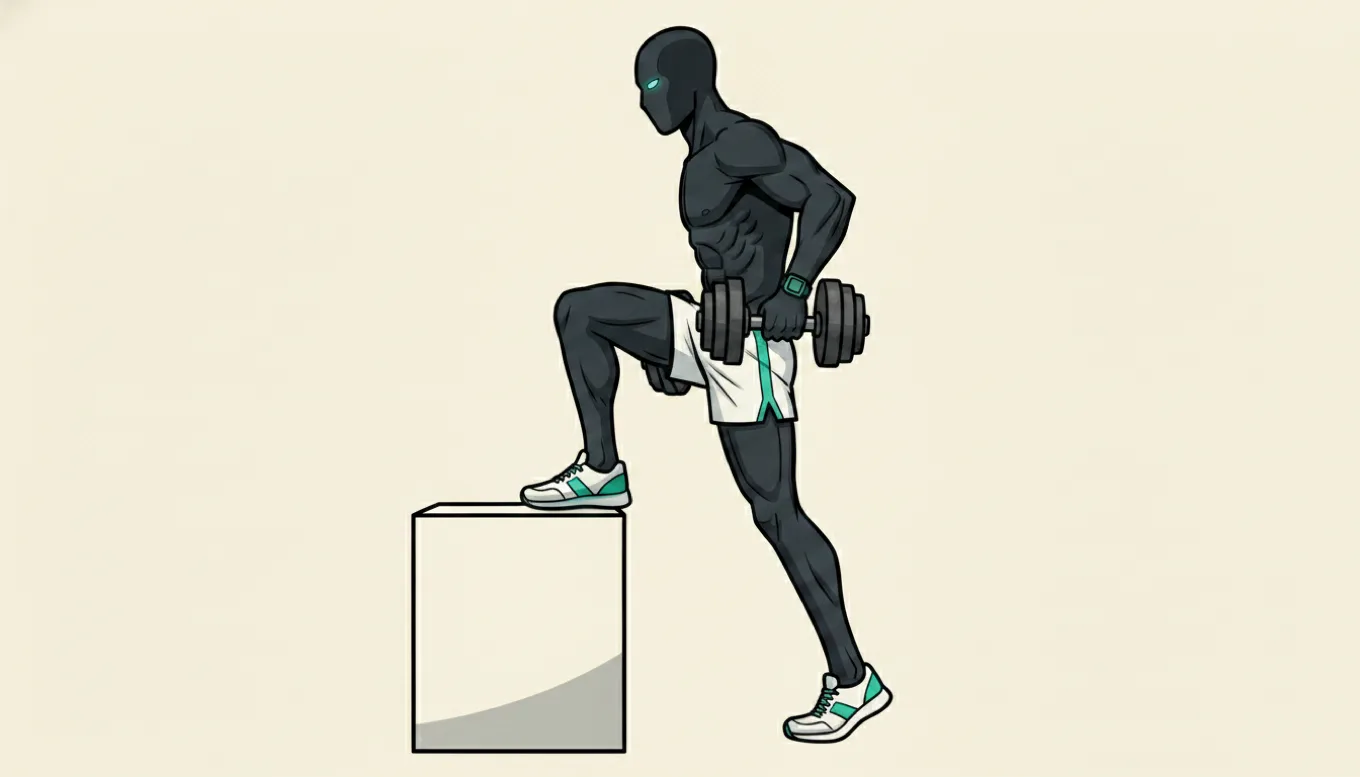
So what should you actually lift? Keep it to the big rocks. A squat or a leg press for raw leg strength. A hinge — a deadlift or a Romanian deadlift — for your hamstrings and glutes, the engine of your stride. A single-leg movement — a split squat, a lunge, or a step-up — because running is a single-leg sport and your weak side is where injuries hide. Calf raises for the springs in your lower legs and feet. And some core and hip work to hold everything together. Five movements cover almost everything a runner needs.
The lifts that protect runners
Pay special attention to the single-leg work, because this is where runners are secretly broken. Running is just hopping from one foot to the other, thousands of times, and almost everyone has a weaker side. Two-legged lifts let the strong side quietly cover for the weak one. Split squats, lunges, and step-ups force each leg to carry its own weight, expose the imbalance, and fix it. Strong, balanced single legs are the difference between absorbing a bad step and tweaking a knee. If you only had time for one category of strength work, this would be it.
Now the dose, because this is where people get it wrong. Two strength sessions a week is plenty. Three to five exercises each, heavy, in the range of three to six reps, just a few hard sets. Leave a rep or two in reserve every set. Put your lifting on the same day as your hard run or on its own day, but never the day before your long run — you want fresh legs for that. Low volume, high quality, and consistency over months. That's the whole game.
And here's how it actually shows up on race day. Early on, strength makes your easy pace feel easier, because each stride simply costs less. In the middle miles, it keeps your form crisp while everyone around you starts to crumble. And in the final stretch, when willpower alone isn't enough, strong legs and a strong core are what physically hold you together. You don't feel strength as strength when you run — you feel it as a pace that just won't quit. Keep lifting heavy through your base building, then ease the volume in the last couple of weeks before a big race so your legs are fresh, but never drop it entirely. The strength you built is the strength you race on.
Don't forget the springs. A little bit of jumping goes a long way for runners. Simple pogo hops, low box jumps, skipping — just a few sets, crisp and bouncy, not exhausting. Plyometrics train your tendons to be stiffer and more elastic, and that translates almost directly into a cheaper, faster stride. A few minutes a week is enough to feel it.
Add lifting without losing running
And don't ignore the bottom of the chain. Your calves, your achilles, and your feet absorb and return force with every single step — they take more total load than anything else you own as a runner. Strong calves and feet are your first line of defense against the achilles and plantar problems that sideline so many people. A few heavy calf raises and some simple foot and ankle work cost you almost nothing and protect the exact part of you that slams into the ground a hundred and seventy times a minute.
Let me save you the mistakes. The first is doing too much — twenty sets of everything, chasing a pump, and showing up to your runs with dead legs. The second is training to failure every set, which buys you soreness without much extra strength. The third is skipping single-leg work, which leaves the exact imbalances that get runners hurt. And the last is neglecting your calves and feet, the springs that take the most punishment with every mile.
Full honesty — I was the runner who refused to lift. I thought the weight room would make me slow, so I just ran more, got hurt more, and plateaued harder. I spent more time injured than training. The year I finally added two simple strength days, the constant little injuries dried up, my form held together late in races, and my times started dropping again. I wasn't running more. I was finally strong enough to run well.
So here's the blueprint. Two strength days a week. Squat or press, a hinge, a single-leg movement, calves, and core. Heavy, low reps, a couple in the tank, just a few sets each. Add a few minutes of crisp jumping for the springs. Keep your hard lift away from your long run, and let your easy days stay easy. Give it eight to twelve weeks and judge it by how durable you feel and how your form holds when you're tired.

Common questions
Will lifting weights make me slower or bulkier as a runner?
No. Two short strength sessions a week build stronger tendons, stiffer springs, and a harder-firing nervous system without adding size. Becoming a bodybuilder takes years of eating and training specifically for size, none of which shows up on the scale from brief heavy lifting.
How do I lift without being too sore to run the next day?
Lift heavy for low reps and stop with a couple of reps in the tank. Soreness comes from high-volume, pump-chasing, train-to-failure lifting, so heavy and brief trains your strength and nervous system with surprisingly little muscle damage. Done right, you can lift hard and run the next day without trashed legs.
What exercises should a runner do in the gym?
Five movements cover almost everything a runner needs: a squat or leg press, a hinge like a deadlift or Romanian deadlift, a single-leg movement such as a split squat or lunge, calf raises, and some core and hip work. Prioritize the single-leg work, since running is a single-leg sport and your weak side is where injuries hide.
How many strength sessions per week do runners actually need?
Two strength sessions a week is plenty. Do three to five exercises each, heavy, in the range of three to six reps for just a few hard sets, leaving a rep or two in reserve. Keep it low volume, high quality, and consistent over months.
Can strength training actually prevent running injuries like shin splints and knee pain?
Yes, because most running injuries are tissue asked to do more than it was built for, not bad luck. Strength training builds that capacity through stronger muscles, tougher tendons, and denser bones, raising the ceiling on what your body can absorb. It's the closest thing runners have to injury armor.
When should I schedule my lifting around my long run?
Put your lifting on the same day as your hard run or on its own day, but never the day before your long run so you have fresh legs. Keep lifting heavy through base building, then ease the volume in the last couple of weeks before a big race, but never drop it entirely.