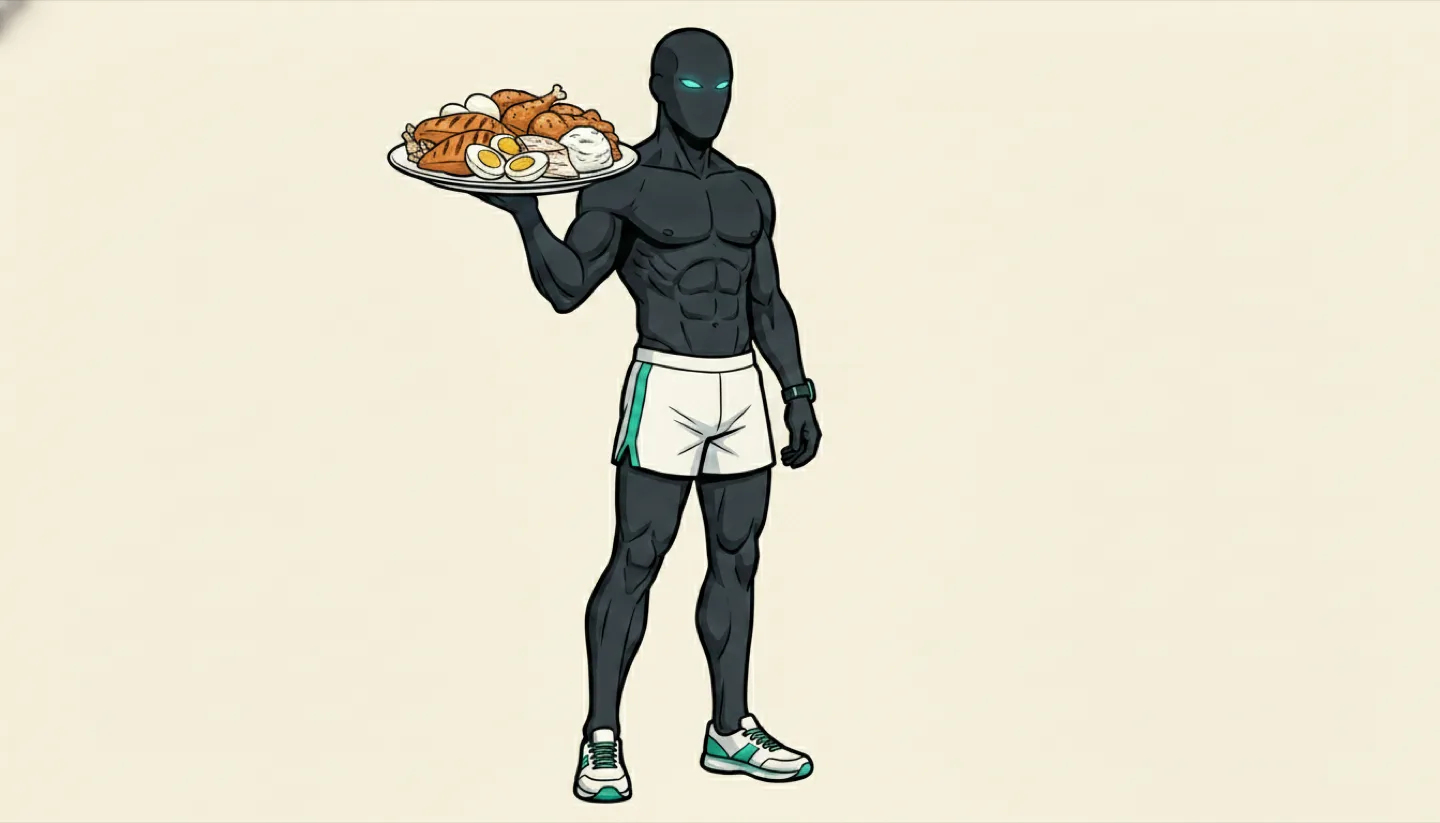
How much protein for a hybrid athlete? The evidence-based target is 1.6–2.2 grams of protein per kilogram of bodyweight per day — meaning a 75 kg athlete needs roughly 120–165 g daily. Sit toward the high end (2.0–2.2 g/kg) when you're in a calorie deficit or running high weekly volume, and toward the low-to-mid end (1.6–1.8 g/kg) during easy maintenance weeks. Hybrid training stacks two demands at once — muscle repair from lifting plus the elevated protein turnover of endurance work — which is exactly why hybrid athletes land higher than pure lifters or pure runners. This guide gives you the g/kg table with gram targets for common bodyweights, the per-meal math, how to time protein around a run-plus-lift day, and where plant protein needs a nudge.
How Much Protein for a Hybrid Athlete: The g/kg Table
The short answer to how much protein a hybrid athlete needs is 1.6–2.2 g per kg of bodyweight per day. That range comes straight from the strength and endurance literature: research consistently shows muscle protein synthesis is maximized around 1.6 g/kg for most trained people, with diminishing returns pushing the practical ceiling to about 2.2 g/kg. Hybrid athletes belong in the upper half of that band because they're paying two adaptation bills at once. Use the table below to turn the ratio into actual grams for your bodyweight.
| Bodyweight | Maintenance (1.6 g/kg) | Standard hybrid (1.8–2.0 g/kg) | Deficit / high volume (2.2 g/kg) | Per meal (0.3–0.4 g/kg) |
|---|---|---|---|---|
| 60 kg (132 lb) | ~96 g | 108–120 g | ~132 g | 18–24 g |
| 75 kg (165 lb) | ~120 g | 135–150 g | ~165 g | 23–30 g |
| 90 kg (198 lb) | ~144 g | 162–180 g | ~198 g | 27–36 g |
Pick your column by your current phase, not your ambition. Cutting weight or logging 40+ km weeks plus three lifting sessions? Live in the right-hand column. Coasting through an easy base week at maintenance calories? The 1.6 g/kg column keeps you fully covered without forcing down food you don't need. Most hybrid athletes should treat 1.8–2.0 g/kg as their everyday default.
Why Hybrid Athletes Need the High End of the Protein Range
A hybrid athlete needs more protein than a pure lifter or a pure runner because concurrent training creates two separate, simultaneous demands on your amino acid pool. Understanding both is what justifies pushing toward 2.0–2.2 g/kg rather than settling for the general-population 0.8 g/kg or even the strength-sport 1.6 g/kg floor.
- Muscle repair from lifting: resistance training creates micro-damage that muscle protein synthesis rebuilds stronger. That process runs on dietary protein, and it stays elevated for 24–48 hours after a hard session.
- Endurance protein turnover: running doesn't just burn carbs and fat — prolonged aerobic work oxidizes branched-chain amino acids for fuel and accelerates the breakdown-and-rebuild cycle in working muscle. More mileage means more turnover to replace.
- Calorie deficits raise the requirement: when you're eating below maintenance to lean out, protein is the macro that protects hard-won muscle. This is the single biggest reason to jump to 2.0–2.2 g/kg — deficits make your body more willing to burn muscle for energy.
- High volume compounds the need: the more total weekly training stress you carry, the larger the ongoing repair bill. Volume, not just intensity, drives protein demand.
Stack lifting damage on top of endurance turnover and you get a repair load that neither single-sport athlete faces. That's the whole case for hybrid athletes anchoring at the top of the range.
Per-Meal Protein Targets: Spreading It Across 3–4 Meals
Total daily protein matters most, but how you distribute it changes how much your body can actually use. Muscle protein synthesis responds to a per-meal dose, and it plateaus once you hit roughly 0.3–0.4 g/kg in one sitting — about 20–40 g depending on bodyweight. Eating your whole day's protein in one giant dinner wastes a chunk of it; spreading it out keeps synthesis switched on across the day.
- Aim for 3–4 protein-anchored meals at ~0.3–0.4 g/kg each. For a 75 kg athlete that's roughly 25–35 g per meal, four times a day.
- Hit the leucine threshold: each meal needs about 2.5–3 g of leucine — the amino acid that triggers synthesis — which a normal 25–35 g animal-protein serving delivers automatically.
- Don't skip breakfast protein: you've been fasting overnight, so a front-loaded protein breakfast restarts repair after your body has been in breakdown mode.
- Round up, not down: hybrid athletes rarely overeat protein, so if a meal lands slightly under target, the fix is more, not less.
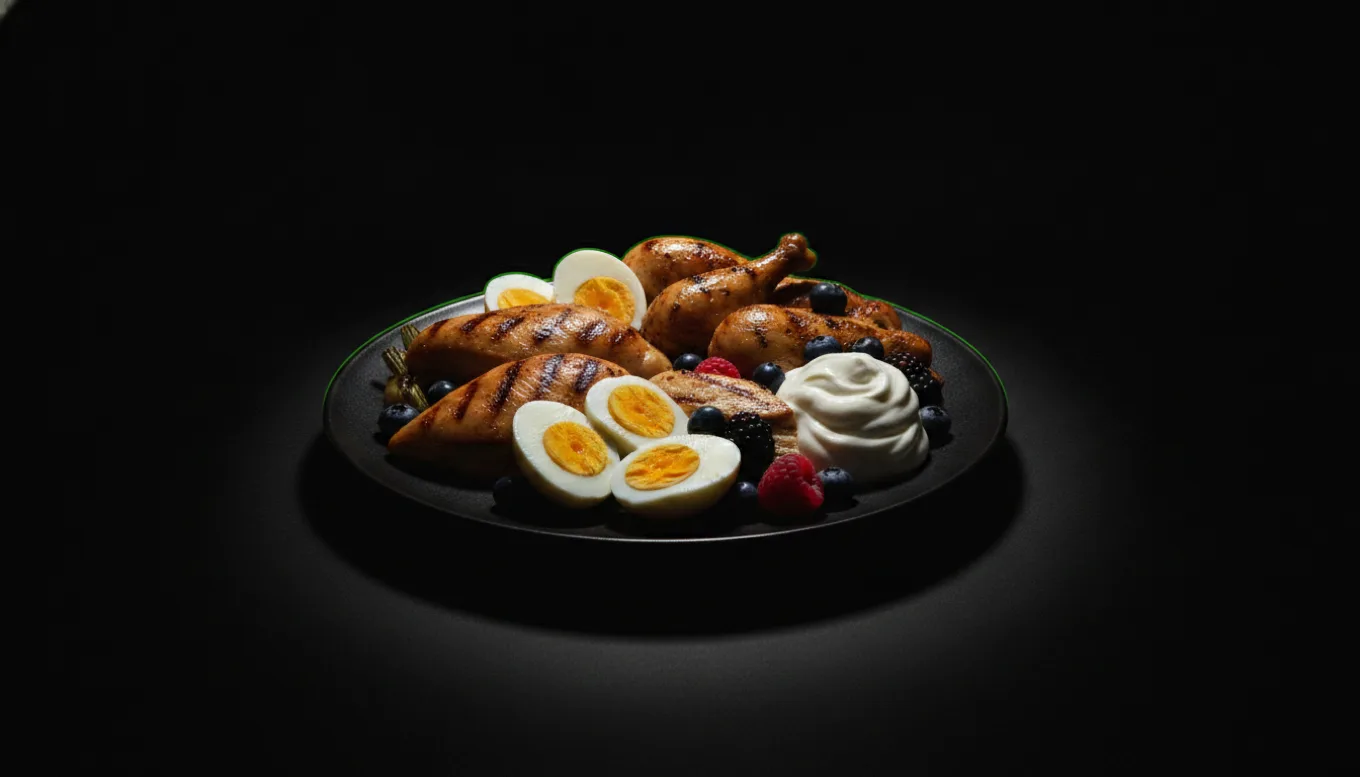
The practical version: four meals of a palm-to-two-palms of protein each — eggs and yogurt, chicken or fish, a shake, and a solid protein dinner — lands most people squarely in range without weighing food.
Protein Timing Around a Run-Plus-Lift Day
On days you run and lift, protein timing shifts from a nice-to-have to a genuine lever — because you've maximized both repair demands in a single day. The old "anabolic window" of 30 minutes has been debunked as a hard deadline, but getting protein in within a couple of hours of finishing your last session still matters, especially when you trained fasted or hard.
- Post-session: get 25–40 g of protein within about two hours of finishing your combined session — this is when the repair machinery is most primed. Pair it with carbs to also refill glycogen.
- Between a split double: if you run in the morning and lift at night, put a full protein meal between them so the second session starts with amino acids on board.
- Before bed: add ~30–40 g of slow-digesting casein (or a large serving of dairy) at night — overnight is prime muscle-repair time and a pre-sleep dose measurably boosts it.
- Around a fasted easy run: a quick 20–25 g dose afterward blunts the extra breakdown that fasted aerobic work causes.
None of this replaces hitting your daily total — timing is the fine-tuning on top of getting your 1.6–2.2 g/kg in. But on your hardest hybrid days, a post-session feed plus a pre-bed dose is the timing that earns its keep.
Plant vs Animal Protein for Hybrid Athletes
You can absolutely fuel hybrid training on plant protein — you just have to account for two differences. Animal sources (meat, eggs, dairy, whey) are complete, leucine-dense, and highly digestible, so a 30 g serving reliably crosses the muscle-building threshold. Plant sources are often lower in leucine and less digestible per gram, which means a hybrid athlete eating mostly plants should adjust upward.
- Add roughly 10–20% to your total: because plant protein is digested and absorbed slightly less efficiently, nudging your daily target up (e.g., from 1.8 to ~2.0–2.2 g/kg) closes the gap.
- Lean on the leucine leaders: soy, tofu, tempeh, edamame, lentils, and seitan carry the most usable protein per serving — build meals around them.
- Blend to complete the amino acids: combining legumes with grains, or using a soy-pea blend protein powder, covers any single source's missing amino acids.
- Bump the per-meal dose slightly: aim for the upper end (~0.4 g/kg) per plant-based meal to guarantee you clear the leucine threshold.
Mixed eaters have it easiest — a couple of animal-protein meals plus plant sources the rest of the day naturally covers both quality and quantity. The differentiator isn't animal-versus-plant dogma; it's simply eating a bit more total protein and a bit more per meal when you go plant-forward.

Common Protein Mistakes Hybrid Athletes Make
Even athletes who know the 1.6–2.2 g/kg number sabotage it in practice. These are the errors that quietly cap your recovery and adaptation despite good training.
- Under-eating protein during a cut: the exact moment you need the high end (2.0–2.2 g/kg) is when appetite drops and people accidentally eat least. Protein is non-negotiable in a deficit.
- Back-loading everything to dinner: one huge protein meal wastes what exceeds the per-meal ceiling; spread it across 3–4 feeds instead.
- Forgetting that big runners burn protein too: endurance athletes often under-target protein because they think it's "just a lifting thing." High mileage raises the requirement independently.
- Chasing supplements over food: whole-food protein comes with the co-factors, and a shake is a convenient top-up, not the foundation.
- Ignoring bodyweight changes: your target is tied to current bodyweight — recalculate as you gain or lose to stay in range.
Fix these five and your protein plan does what it's supposed to: rebuild everything two sports tore down, day after day.
Common questions
How much protein does a hybrid athlete need per day?
A hybrid athlete needs 1.6–2.2 grams of protein per kilogram of bodyweight per day. That's roughly 120–165 g for a 75 kg athlete. Sit at the high end (2.0–2.2 g/kg) during a calorie deficit or high training volume, and toward 1.6–1.8 g/kg on easy maintenance weeks.
Is 2 grams of protein per kg too much for a hybrid athlete?
No — 2 g/kg is well within the evidence-based range for hybrid athletes and is a sensible everyday default. The literature shows benefits up to about 2.2 g/kg, with the extra protein especially protecting muscle in a deficit. Going far beyond 2.2 g/kg simply offers no added muscle-building return.
How much protein should I eat per meal?
Aim for about 0.3–0.4 g of protein per kg of bodyweight per meal — roughly 20–40 g depending on your size — across 3–4 meals a day. This clears the ~2.5–3 g leucine threshold that maximizes muscle protein synthesis at each sitting, which one giant daily meal cannot do as effectively.
When should I eat protein around running and lifting?
Get 25–40 g of protein within about two hours of finishing your session, paired with carbs to refill glycogen. On split doubles, eat a protein meal between the run and the lift. Adding ~30–40 g of casein before bed covers overnight repair on your hardest hybrid days.
Do hybrid athletes need more protein on plant-based diets?
Yes, slightly. Because plant protein is digested less efficiently and often lower in leucine, plant-based hybrid athletes should add roughly 10–20% to their total (e.g., 2.0–2.2 instead of 1.8 g/kg) and build meals around soy, legumes, tofu, and blended protein powders to close the amino-acid gap.