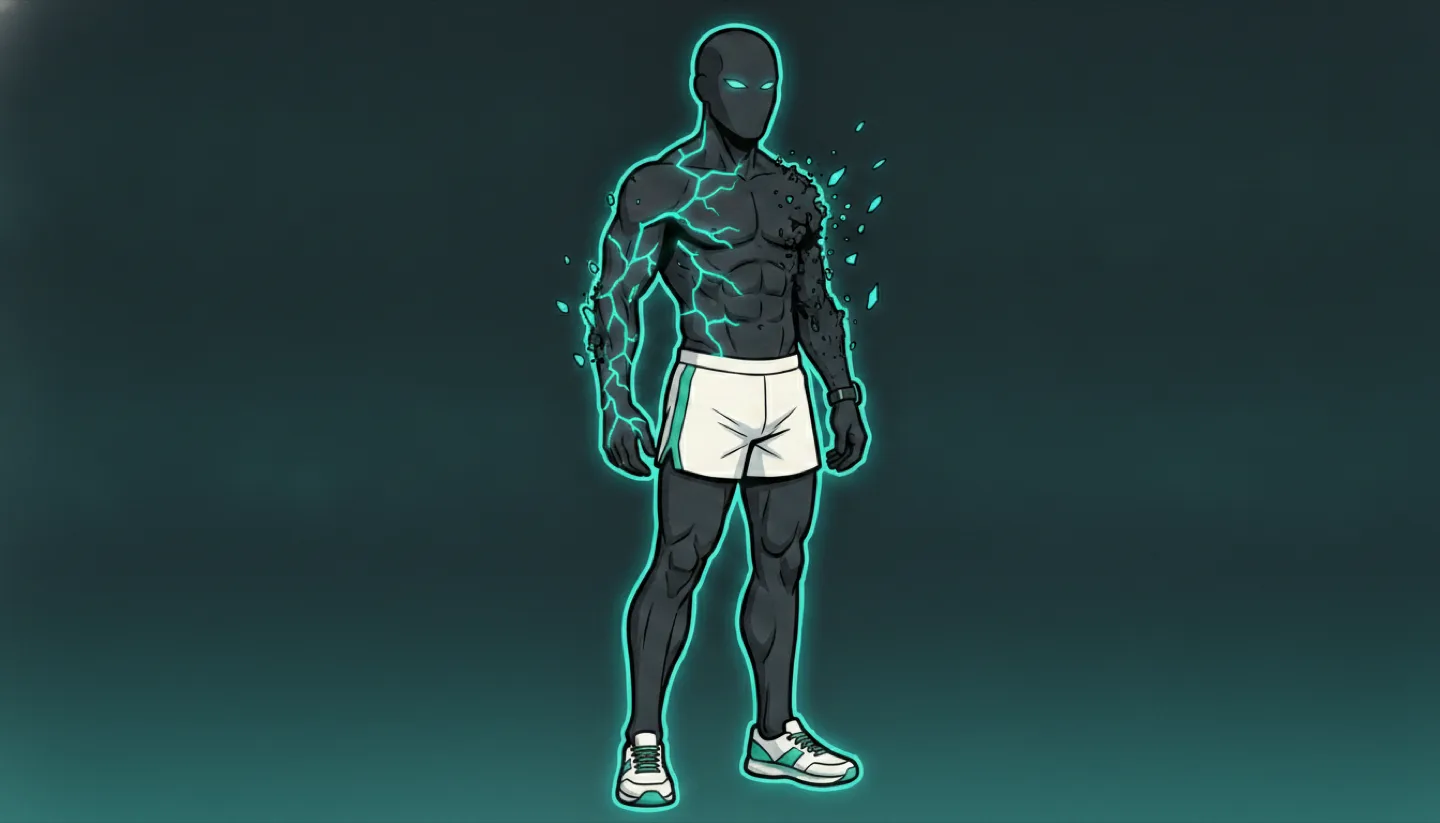
You're not fat. You're not skinny either. In a t-shirt you look fine. Maybe even lean. But the shirt comes off, and the story changes. Soft middle. No shape. No edges. You're skinny-fat. And here's the part nobody tells you: more cardio won't fix it. Eating less won't fix it. You've probably been trying both for years, and you're still standing in the same mirror.
The t-shirt lie
I was exactly here. Skinny everywhere I wanted muscle, soft everywhere I didn't. So let me save you the wasted years. Today I'll show you what skinny-fat actually is, why it happens, and the exact way out. No crash diets. No two-hour gym sessions. Just the real fix.
First, what is skinny-fat, really? It's not a weight problem. You can be skinny-fat at a totally normal number on the scale. It's a body composition problem. Two things are true at the same time: you carry too little muscle, and you carry too much fat for that amount of muscle. Low muscle, high relative fat. That combination is what makes you look soft in clothes that should fit great.
And the worst part is where that fat likes to sit. It's not just under the skin. A lot of it is visceral fat, the deep fat that wraps around your organs in your midsection. That's the fat that gives you a soft, round belly even when your arms and legs look thin. It's also the fat that's worst for your health. So this isn't only about looks. This is about what's happening under the hood.
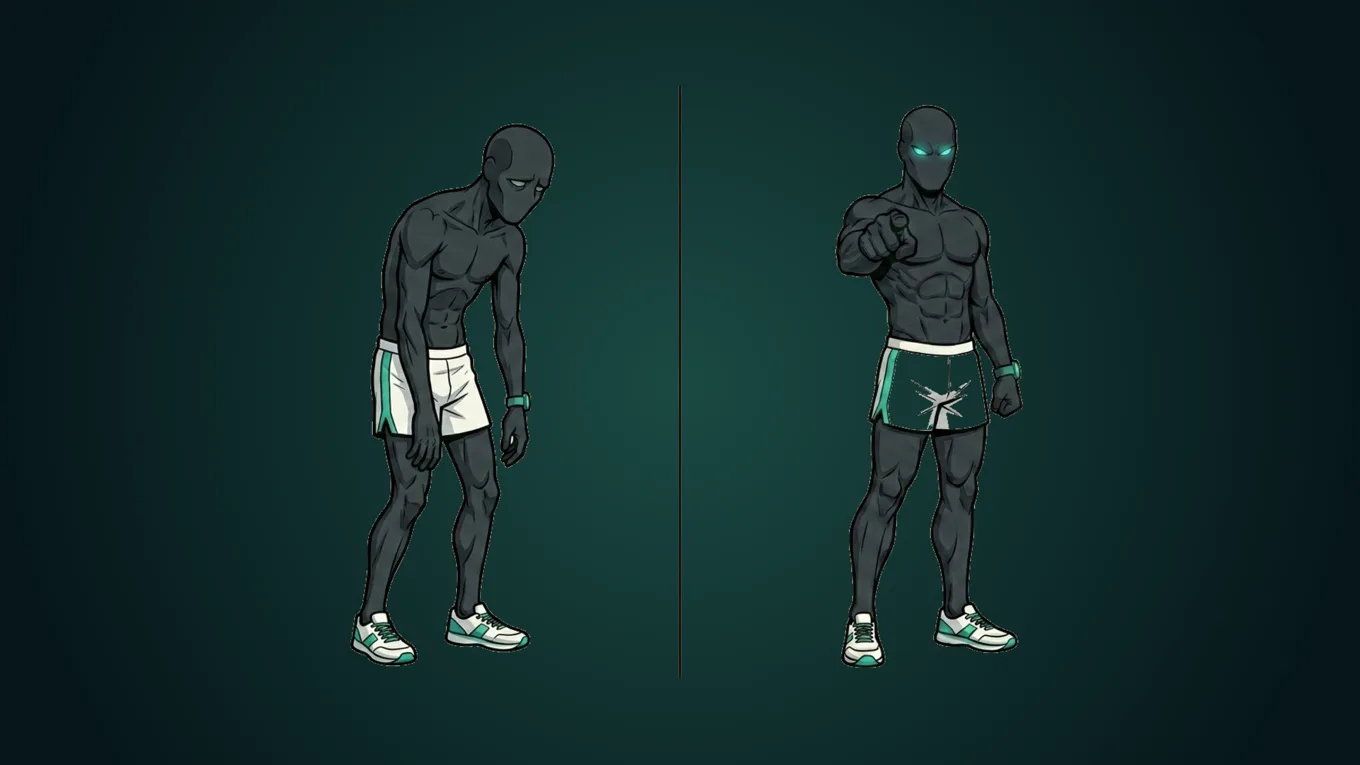
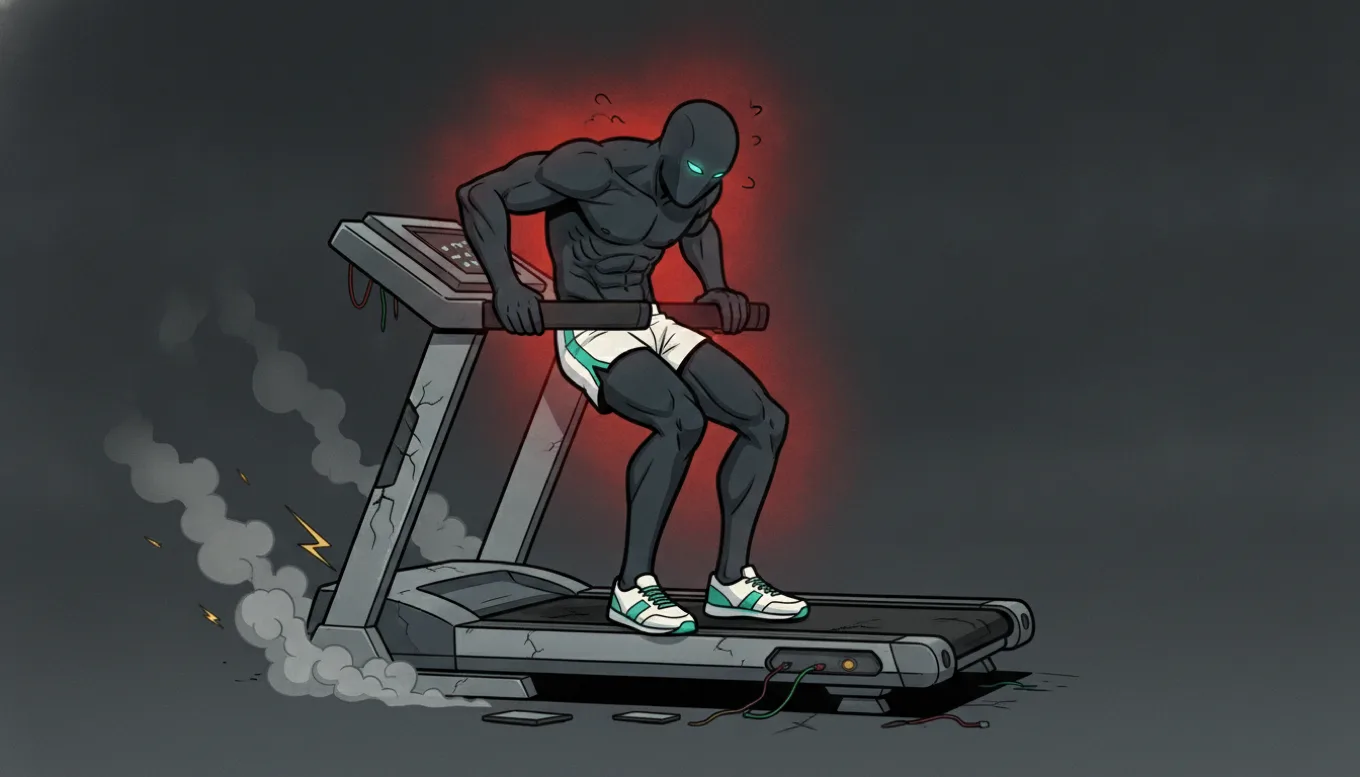
So why does it happen? Cause number one: you have almost no muscle. Most skinny-fat people have spent years either doing nothing, or doing only cardio. Running, cycling, classes, steps. All good for your heart, none of it tells your body to build or even keep muscle. So year after year, muscle quietly leaves. And muscle is the tissue that gives you shape, that burns calories at rest, that makes you look fit. Lose it, and even at a low weight, you look smooth and shapeless.
Cause number two: how you eat. Skinny-fat is often built on a very specific pattern. You under-eat all day, barely any protein, trying to stay lean. Then by evening you're starving and you overshoot on quick carbs and snacks. Your body gets almost no protein to build muscle, and a flood of easy calories to store as fat. It's the perfect recipe for losing muscle and gaining the soft stuff.
Why more cardio backfires
And that eating pattern hits your blood sugar hard. When you live on quick carbs and skip protein and fiber, your blood sugar spikes high, then crashes. Spike, crash, spike, crash, all day. Each crash leaves you tired and hungry again, reaching for more quick carbs. Over time, all that excess gets pushed into fat storage, and a lot of it heads straight to that deep belly fat. Stable blood sugar is one of your quiet superpowers here, and almost nobody talks about it.
Cause number three: stress and sleep. This is the one people ignore completely. Chronic stress keeps a hormone called cortisol high. And high cortisol tells your body to hold onto belly fat and break down muscle, the exact opposite of what you want. Add bad sleep on top, and it gets worse. Poor sleep wrecks your hunger signals, kills your recovery, and quietly steals muscle. You can train perfectly and eat perfectly, but if you're stressed and sleeping five hours, your body fights you the whole way.
So that's the trap. Too little muscle, a blood-sugar rollercoaster, deep belly fat, high stress, bad sleep. Now let's get you out of it. Here is the actual fix, in order of importance.
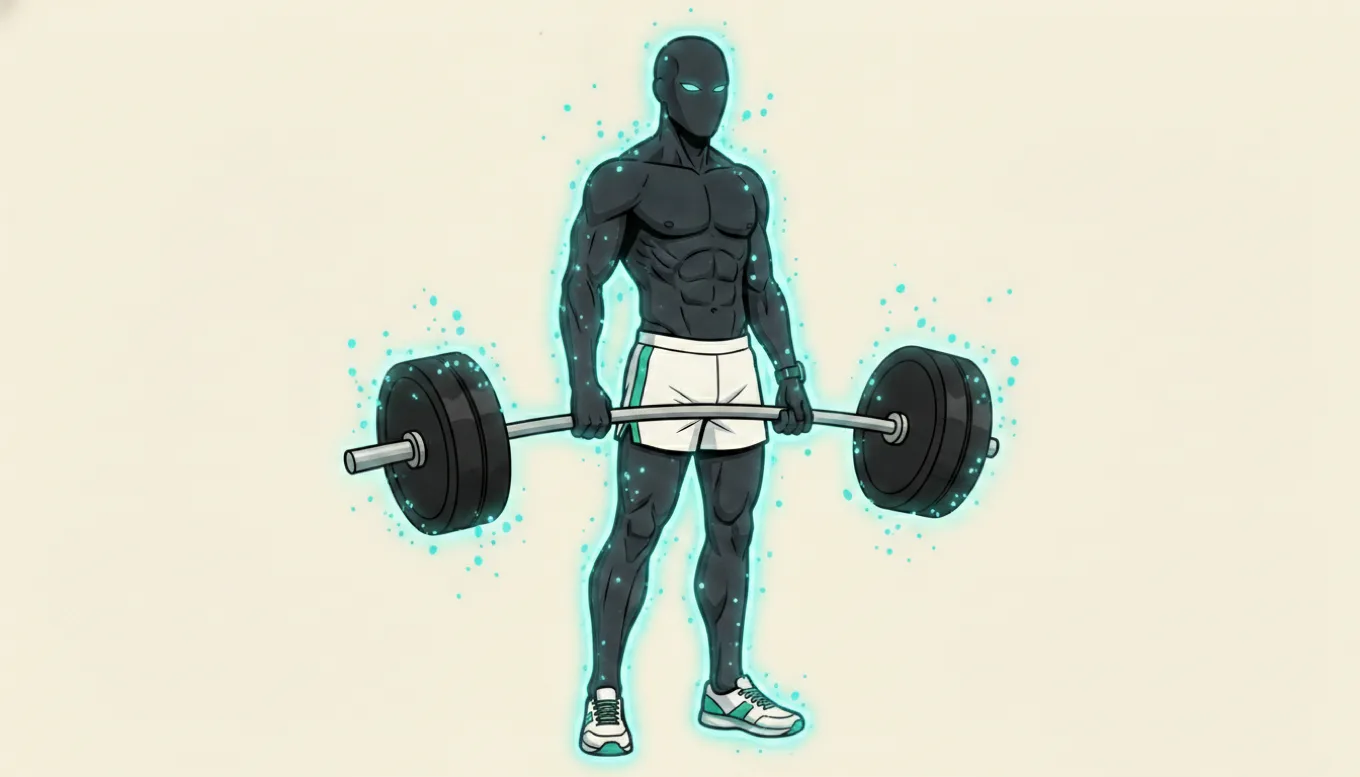
Fix number one, and this is the big one: lift weights. Lift heavy, and lift with intent. This is the single most important thing a skinny-fat person can do, and it's the one they avoid most. You do not need to run more. You need to build the muscle you never had. Three short strength sessions a week is plenty. Focus on the big movements that hit the whole body: a squat, a hinge like a deadlift or hip thrust, a push, a pull. That's it. These build the muscle that gives you shape and turns soft into solid.
And here's the magic of your situation. As a skinny-fat beginner, you can build muscle and lose fat at the same time. It's called body recomposition. Most people can't do both at once, but when you're undertrained and carrying extra fat, your body is primed for it. Lift hard, eat enough protein, and over a few months the soft middle shrinks while your shoulders, chest, and arms fill out. Same scale weight, completely different body. That's the dream, and for you it's real.
Recomp: build and lean at once
Fix number two: protein, every meal. This is what makes the lifting actually work. Aim for roughly one and a half to two grams of protein per kilogram of body weight, every single day. Spread it out. Get a real dose of protein at breakfast, not just coffee. Eggs, Greek yogurt, a shake, whatever you'll actually eat. Then again at lunch and dinner. Chicken, fish, lean meat, beans. Protein builds and protects muscle, it keeps you full so you stop binging at night, and it barely gets stored as fat. If you change one thing about your eating, make it protein at every meal.
Fix number three: fix your blood sugar with simple food. You don't need to go zero-carb. You need to stop riding the rollercoaster. Build your meals around protein, fiber, and whole foods. Vegetables, fruit, oats, rice, potatoes. Real food that digests slowly. When protein and fiber come first, your blood sugar rises gently instead of spiking and crashing. Steady energy, fewer cravings, less fat storage. It's not exciting, but it quietly fixes half your problem.
Fix number four: keep cardio, but put it in its place. I'm not anti-cardio. Easy cardio is great for your heart and your recovery. But it is not the tool that fixes skinny-fat, and it can't replace lifting. Keep two or three easy sessions a week. A relaxed run, a long walk, an easy bike. Zone two, where you can still talk. That's the dose. Use cardio to support your training and your health, not as your whole plan.
Fix number five: sleep and stress, treated like training. Sleep is where you actually build the muscle you trained for. Aim for seven to eight hours, and protect it like a workout. And get your stress down, because chronic stress and high cortisol will undo your hard work. Walk, breathe, get outside, get off your phone before bed. This isn't soft advice. For a skinny-fat body, recovery is where the change happens.
And one more, an easy win: hydration and electrolytes. When you start eating cleaner and training, a lot of people feel flat and tired, and they blame the diet. Often it's just water and salt. Your muscles run on hydration and minerals like sodium, potassium, and magnesium. Drink enough water, and don't be afraid of salt and electrolytes around your training. You'll feel more energetic, your workouts will be stronger, and you'll recover faster. Small thing, big difference.
The plan that actually works
Now let me be honest about the timeline, because the internet lies to you. This is not a four-week transformation. The first month, you'll mostly feel better, sleep better, and get stronger in the gym. The visible change, the soft middle tightening and the shape coming in, that's two to four months of consistency. Six months in, people will ask what you've been doing. It's not fast, but it is permanent, because you're building a body, not crashing a diet.
And here's the mistake I see over and over. People panic about the scale. They start lifting and eating protein, the scale doesn't drop, and they quit. But you're adding muscle while losing fat. The scale can stay flat while your body completely changes. Throw away the scale obsession. Use the mirror, use photos, use how your clothes fit. That's the truth the scale will never tell you.
Let me give you the whole plan in one breath. Lift heavy three times a week. Eat protein at every meal. Build meals around real food so your blood sugar stays steady. Keep two or three easy cardio sessions. Sleep seven to eight hours and manage your stress. Stay hydrated. Stay patient. Do that, and skinny-fat is gone for good.
I lived in that soft, shapeless body for years, chasing it with more cardio and less food, getting nowhere. The day I started lifting and eating real protein, everything changed, and it never came back. You are not stuck. You're just missing muscle and a little structure. Add both, and you'll build a body that looks as strong as it feels.

Common questions
Why won't more cardio fix skinny-fat?
Cardio is good for your heart but never tells your body to build or keep muscle, which is what skinny-fat lacks. Running, cycling, and classes can't replace lifting weights, the single most important fix for a skinny-fat body.
How do you fix a skinny-fat body?
Lift heavy three times a week, eat protein at every meal, build meals around real food for steady blood sugar, keep two or three easy cardio sessions, sleep seven to eight hours, manage stress, and stay hydrated. Lifting is the most important fix because it builds the muscle that gives you shape.
Can you build muscle and lose fat at the same time when skinny-fat?
Yes. Skinny-fat beginners can build muscle and lose fat simultaneously through body recomposition, because an undertrained body carrying extra fat is primed for it. Over a few months the soft middle shrinks while shoulders, chest, and arms fill out, even at the same scale weight.
How much protein should you eat to fix skinny-fat?
Aim for roughly 1.5 to 2 grams of protein per kilogram of body weight every day, spread across breakfast, lunch, and dinner. Protein builds and protects muscle, keeps you full so you stop binging at night, and barely gets stored as fat.
How long does it take to fix a skinny-fat body?
The visible change, with the soft middle tightening and shape coming in, takes two to four months of consistency. In the first month you mostly feel better and get stronger, and by six months people will ask what you've been doing.
Why isn't the scale changing when I lift and eat protein?
The scale can stay flat because you're adding muscle while losing fat at the same time, so your body changes completely even when the number doesn't drop. Track progress with the mirror, photos, and how your clothes fit instead of obsessing over the scale.