
You run, and you run hard. Every run feels like a test — chest heaving, legs burning, the watch your only judge. You're putting in the miles, you're suffering, and yet your times won't budge and your lifts are quietly slipping. Here's the part nobody wants to hear: the problem isn't that you're running too little. It's that you're running too hard. The pace that actually builds your engine feels almost embarrassingly easy — and once you understand why, you'll never waste a run again.
Suffering isn't training
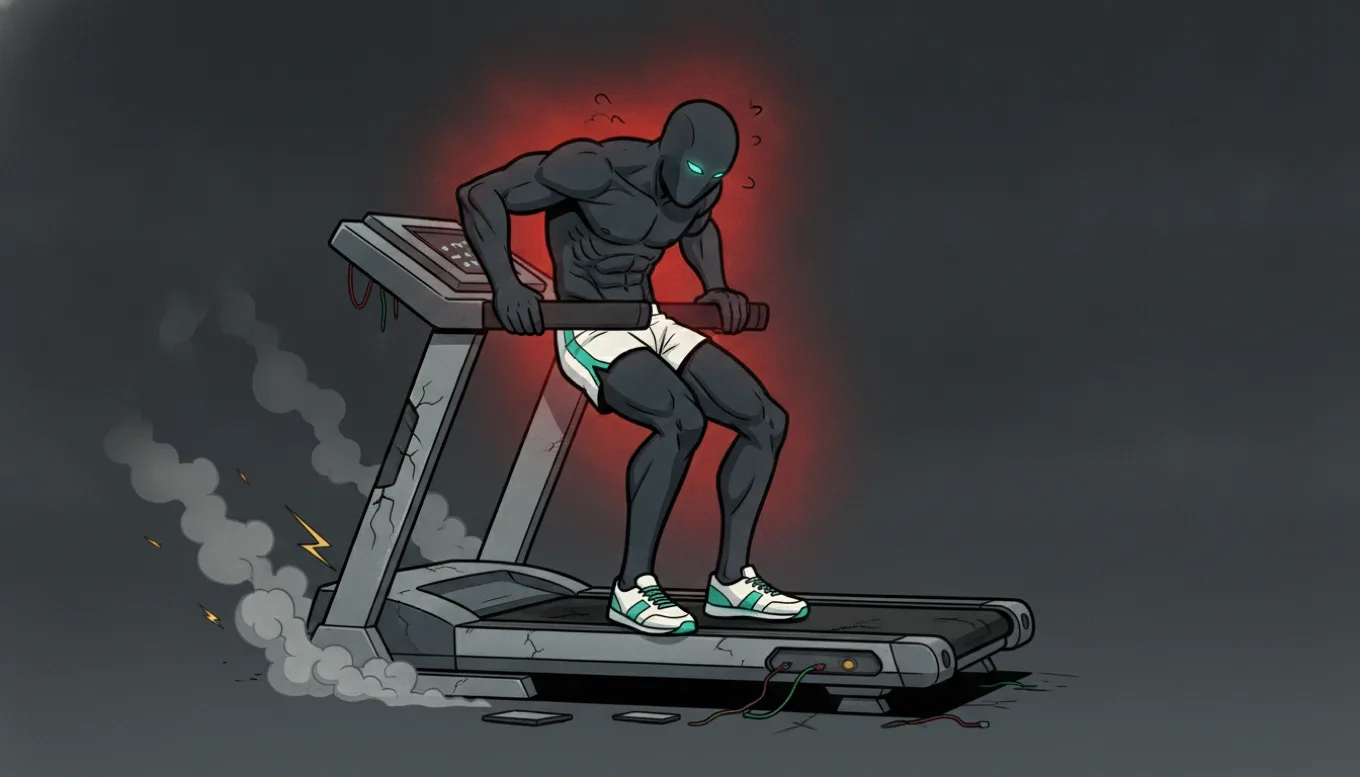
You know the feeling. You head out, and within two minutes your ego takes the wheel. Someone passes you, your watch shows a slow number, and you speed up. Slowing down feels lazy. It feels like you're not really training. So every run becomes a medium-hard grind — not easy enough to recover, not hard enough to break through. It feels productive. It's actually the most common trap in endurance training.
The lie you've absorbed is "no pain, no gain." That if you're not gassed, you're wasting your time. That easy miles are junk miles. It's completely backwards. Easy running isn't the filler between the hard stuff — easy running is the foundation that makes the hard stuff possible. The athletes with the best engines on earth do most of their running at a pace you'd be ashamed to post. They're not being lazy. They're building something you can't see.
So what actually is zone 2? Picture your effort on a scale of five zones, from a walk to an all-out sprint. Zone 2 is the second step — easy, aerobic, conversational. The simplest test: you should be able to hold a full conversation, complete sentences, no gasping between words. If you can only get out three or four words at a time, you've drifted too high. Roughly, it's around sixty to seventy percent of your max heart rate — but you don't need a lab. You just need to be honest about how easy easy really is.
Here's what's happening under the hood, because this is where it gets good. When you run easy for a long time, you send your body a very specific signal: get more efficient at producing energy with oxygen. In response, your body builds more mitochondria — the tiny engines inside your muscle cells that turn fuel into movement. Not just more of them, bigger ones. At the same time, it grows new capillaries — tiny blood vessels that deliver oxygen and carry away waste — weaving a denser network through the working muscle. Your heart gets stronger too, pushing more blood with every single beat. And you teach your body to burn fat for fuel, sparing the limited sugar you've got stored. More engines, more delivery, a bigger pump, a cleaner fuel source. That is an aerobic base. And here's the catch: this adaptation only happens at easy intensities. Push too hard and you trade that deep, structural change for short-term burning you can't recover from.
The recovery you keep skipping
Now why does this matter so much if you also lift? Because the same easy running that builds your engine barely touches your recovery. A true zone-two run leaves you fresher, not destroyed. It pumps blood through sore muscles and actually helps you bounce back. That means you can run and lift in the same week without the two halves eating each other alive. A bigger aerobic base also means you recover faster between sets, your work capacity climbs, and that brutal out-of-breath feeling after one heavy set starts to disappear. Zone two is the rare thing in training that builds you up without costing you anything.
And it goes beyond performance. Teaching your body to burn fat at easy efforts is one of the most powerful things you can do for your long-term health. A strong aerobic base is tied to a lower resting heart rate, better blood sugar control, and a metabolism that stays flexible as you age. The same easy miles that drop your race times are quietly protecting your heart for the next forty years. You're not just training for your next event. You're building an engine you actually get to keep.
But won't running slow make you slow? It's the first thing everyone fears. The answer is no, and it's not even close. Speed sits on top of the base, it doesn't replace it. The bigger your aerobic engine, the more speed work you can absorb and the faster you get when it counts. This is the famous eighty-twenty rule: about eighty percent of your running should be genuinely easy, and only twenty percent hard. That ratio shows up in distance runners, in cyclists, in nearly every endurance sport at the highest level. The hard days are the seasoning. The easy days are the meal.
So how do you actually find your zone two? Start with the talk test — say a full sentence out loud, and if you can't, slow down until you can. If you train with heart rate, a rough ceiling is one hundred eighty minus your age, but treat that as a starting point, not gospel. Expect your easy pace to feel slower than your pride wants — for a lot of people, real zone two is barely faster than a brisk walk at first, and that is completely normal. Be willing to slow to a walk on the hills to keep your effort steady. The goal isn't a pace on your watch. The goal is an effort you could hold for an hour while having a conversation.

Easy days make fast races
How much should you do? Most of your weekly running, easy. One run, maybe two, with some real intensity, and the rest in zone two. Aim to build toward roughly two to four easy sessions a week, thirty to sixty minutes each, and let total time on feet climb slowly. The magic isn't in any single run. It's in the quiet accumulation of easy aerobic minutes, week after week, while you stay healthy enough to keep stacking them.
Let me save you the mistakes I made. The first is starting too fast and settling in — by then you're already too high. The second is living in the gray zone: that comfortably-hard pace that feels like training but is too hard to recover from and too easy to drive real adaptation. It's the worst of both worlds, and most runners live there. The third is impatience — quitting zone two after two weeks because it feels too easy to be working. It is working. You just can't feel mitochondria growing. And the last one is treating every single run as a test of your fitness instead of a deposit into it.
And let me be honest about what the first few weeks feel like, because this is where most people bail. At first, running this slow is uncomfortable in a different way — not your lungs, your ego. You'll feel like you're barely moving, people will pass you, and your watch will show paces you would never brag about. Push through that, because somewhere around week four or five something clicks: the same easy effort starts to feel faster, your heart rate drifts down, and you finish runs feeling like you could turn around and do it all again. That is the base being built underneath you. You can't rush it, and you can't fake it.
Build the engine on purpose
Full honesty — I lived in the gray zone for years. Every run was comfortably hard, every run felt earned, and I got slower while getting more tired. I was convinced suffering was the point. The year I finally swallowed my ego and ran eighty percent of my miles genuinely easy was the year my race times dropped, my resting heart rate fell, and my lifts stopped getting crushed by my running. I didn't train harder. I trained easier, on purpose, and let the hard days actually be hard.
Let me make the hybrid part concrete, because this is where people get stuck. Your easy zone-two runs are so gentle they won't steal from your squat, so you can put them on your lifting days or on their own. Save your one hard run for a day when your legs are fresh — never the day before leg day, and never the day after. Keep your two hardest sessions of the week as far apart as you can. A simple shape: lift heavy and run easy early in the week, take your one quality run mid-week when you're fresh, and finish with a longer easy run on the weekend. Hard and easy, never two hard days colliding.
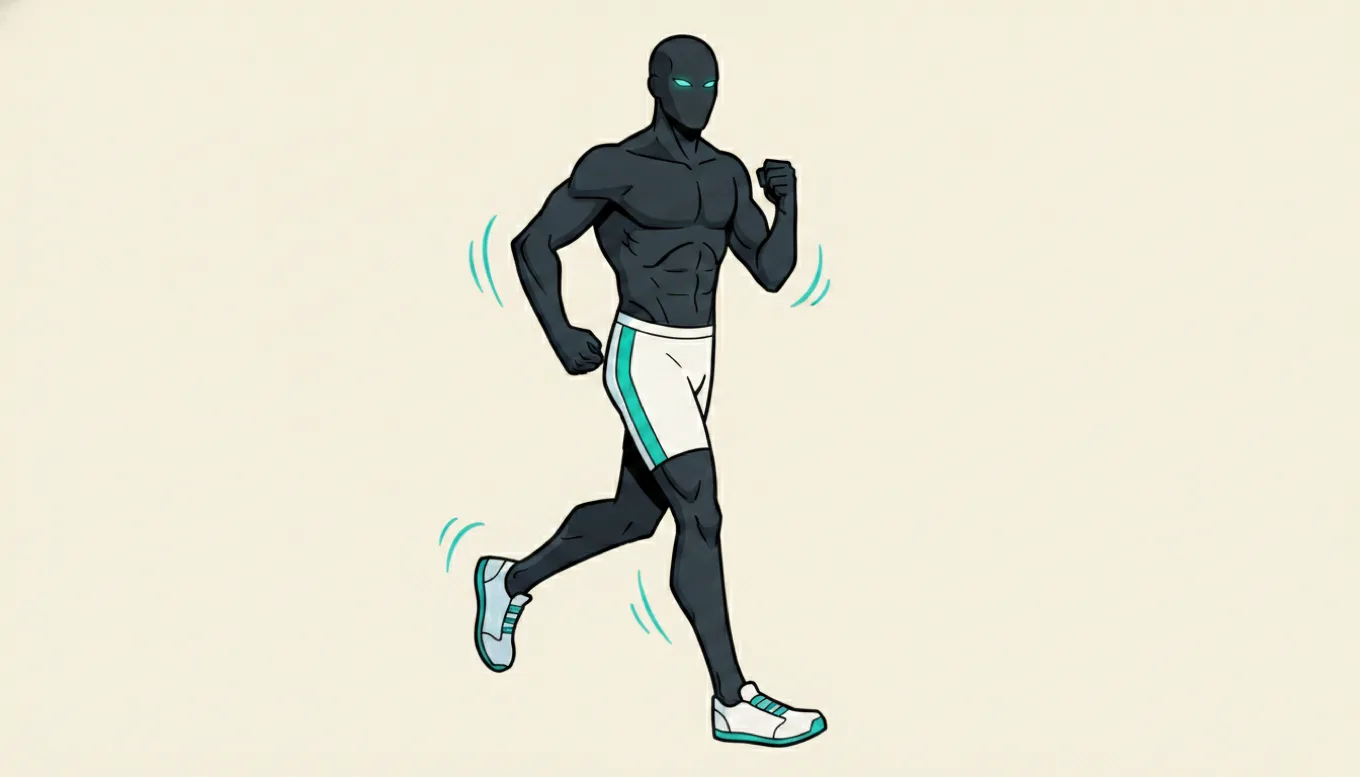
So here's the blueprint. Most of your runs: zone two, conversational, slow enough to talk. One quality run a week where you let it rip. Use the talk test every time and check your ego at the door. Build your easy minutes slowly, walk the hills if you have to, and give it six to eight weeks before you judge it. Keep lifting on your hard days, keep your easy days truly easy, and let the contrast do the work. Simple, patient, and almost impossible to mess up if you stay honest about the effort.

Common questions
Why won't my race times improve even though I run hard every day?
The problem usually isn't too little running, it's running too hard on every session. Most runners live in a 'gray zone' pace that's too hard to recover from and too easy to drive real adaptation, so times stall and lifts slip.
What is zone 2 running and how do I know if I'm in it?
Zone 2 is easy, aerobic, conversational running at roughly 60-70% of your max heart rate. The simplest test: you should be able to hold a full conversation in complete sentences without gasping between words, if you can only get out three or four words at a time, you've drifted too high.
Won't running slow make me slower?
No, running easy doesn't make you slow because speed sits on top of your aerobic base rather than replacing it. The bigger your aerobic engine, the more speed work you can absorb and the faster you get when it counts.
What is the 80/20 rule in endurance training?
The 80/20 rule means about 80% of your running should be genuinely easy and only 20% hard. This ratio shows up in distance runners, cyclists, and nearly every endurance sport at the highest level.
How do I combine easy running with lifting without hurting recovery?
Easy zone-2 runs barely touch your recovery and can go on lifting days, since they leave you fresher and pump blood through sore muscles to help you bounce back. Save your one hard run for a day when your legs are fresh, never the day before or after leg day, and keep your two hardest sessions as far apart as possible.
How much zone 2 running should I do per week?
Aim to build toward roughly two to four easy sessions a week of thirty to sixty minutes each, with most weekly running easy and only one or two runs at real intensity. Let total time on feet climb slowly, since the gains come from accumulating easy aerobic minutes week after week.
How long before zone 2 training starts working?
Give zone 2 six to eight weeks before you judge it, as the improvements aren't immediate. Around week four or five something clicks: the same easy effort starts to feel faster and your heart rate drifts down.