
You finally decided to do both. Run AND lift. So you ran on your lifting days, lifted on your running days, threw in a spin class because why not, and six weeks later your legs are always sore, your runs feel like wading through wet sand, and your bench hasn't moved an inch. You didn't get hybrid. You got tired. Here's exactly why that happens, and the simple week that fixes it without living in the gym.
The trap: doing everything at once
It feels like you're not doing enough, so you add more. More runs, more lifts, more days. And it backfires every single time. The problem was never your effort. It's a structure problem. And once you see the right structure, you can't unsee how messy your week was.
The lie you've been told is that more sessions equals more progress. That a real hybrid athlete trains six, seven days a week. That's not dedication, that's just digging a hole you can't recover out of. Volume you can't recover from isn't training. It's damage with a timer on it.
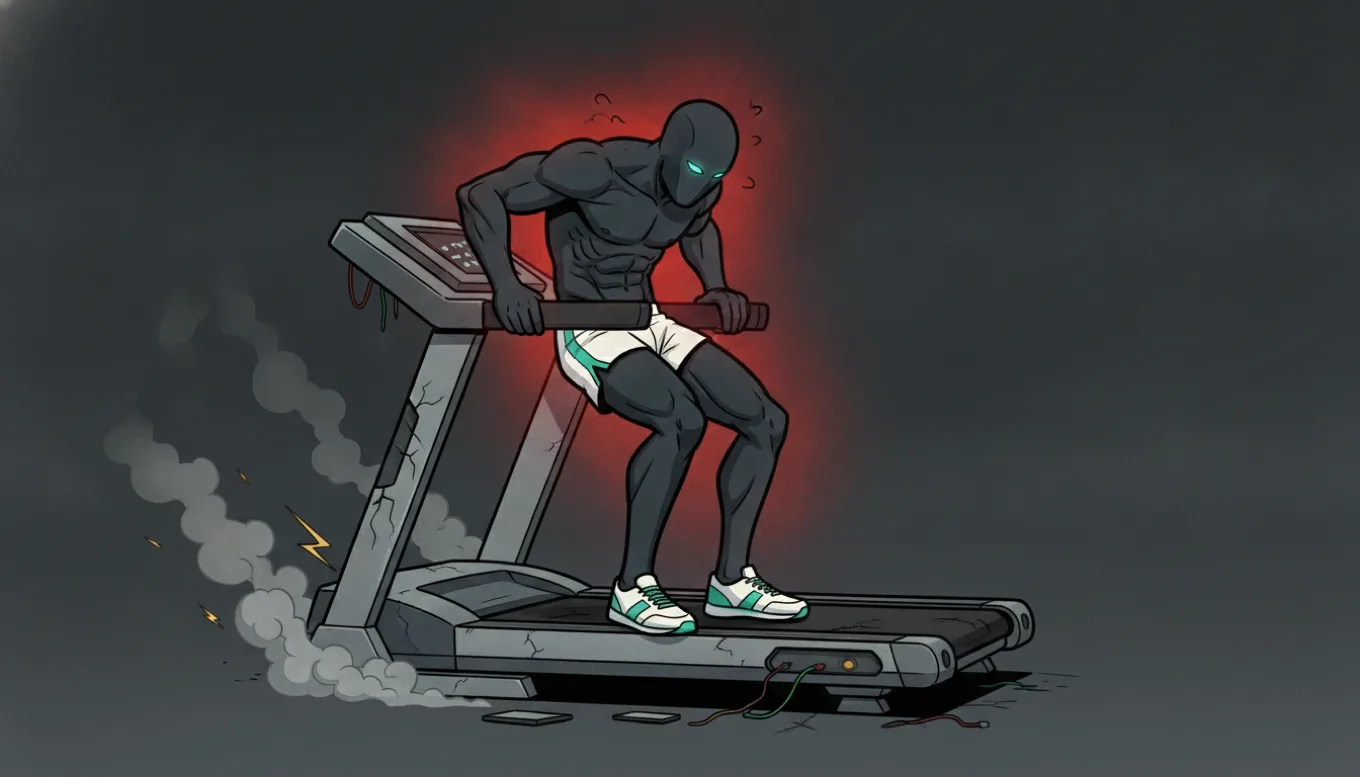
Why more isn't hybrid
Here's what's actually happening under the hood. Your body adapts when you give it a hard signal and then let it recover. Running and lifting both pull from the same recovery bank. The same nervous system, the same sleep, the same food. Stack two hard days back to back and neither one finishes the job. Your easy run carries fatigue from yesterday's squats, so it's not easy, it's just slow and heavy. Your lift carries fatigue from yesterday's intervals, so the bar feels glued to the floor. Nobody says this out loud, but most people aren't overtrained. They're under-organized. The engine and the chassis are fighting for the same fuel, and you never told them whose turn it is.
But won't five days feel like too little if I want both? Here's the kicker: five focused days beat seven scattered ones, easily. Because the magic isn't in the sessions, it's in the contrast. Hard days hard, easy days genuinely easy. When your easy run is actually easy, your hard lift can actually be hard. And that contrast is what makes both halves grow. Three runs build the engine. Two lifts build the chassis. Two full rest or active recovery days let the adaptation actually happen.

Structure beats effort
You don't have a discipline problem. You have a missing blueprint. Give the week a shape, and the same effort suddenly works. Full honesty, I lived the messy version. I was the guy who trained every day and progressed at nothing, convinced more was the answer. The week that finally worked had fewer sessions, not more. That's the year my deadlift went up and I ran a marathon under four hours. Same body. Better map.

The simple weekly split
So here's the actual week. Five training days, two recovery days, and the order matters more than anything. First, the three runs. One easy zone-two run, conversational, the one where you could talk in full sentences. One quality run, intervals or a tempo, your only hard run of the week. And one long run, slow, steady, time on feet, building the engine. Then the two lifts. One lower body strength day, squat or deadlift, heavy, low reps, the chassis. And one upper body day, press and pull, push and row, balanced. Now the part everyone gets wrong: ordering. Keep your hard run and your leg day apart. Never the day before your long run, or your long run pays for it. Put easy days or rest between your two hardest sessions. A simple shape that works: Monday lower body lift, Tuesday easy run, Wednesday upper body lift, Thursday quality run, Friday rest, Saturday long run, Sunday off or a walk. Hard, easy, hard, easy, rest, long, rest. And progress it slowly. Add a little to one session every couple of weeks, not to all of them at once. Stack it smart, not maximal.

Common questions
How many days a week should I train to run and lift at the same time?
Train five focused days a week: three runs, two lifts, and two full rest or active-recovery days. Five focused days beat seven scattered ones because contrast between hard and easy days is what makes both halves grow.
Why do my runs feel slow and my lifts feel heavy when I do both?
Running and lifting pull from the same recovery bank: the same nervous system, sleep, and food. When you stack two hard days back to back, your easy run carries fatigue from yesterday's squats and your lift carries fatigue from yesterday's intervals, so neither session finishes the job.
What does a good hybrid training week actually look like?
A simple shape that works is Monday lower-body lift, Tuesday easy run, Wednesday upper-body lift, Thursday quality run, Friday rest, Saturday long run, Sunday off or a walk. The pattern is hard, easy, hard, easy, rest, long, rest, keeping the two hardest sessions apart.
Should I run on my lifting days to fit both in?
No, stacking hard runs and hard lifts back to back is why most people stall. Put easy days or rest between your two hardest sessions so hard days stay hard and easy days stay genuinely easy.
How should I structure my runs when also lifting?
Do three runs a week: one easy zone-two conversational run, one quality run of intervals or tempo as your only hard run, and one slow long run for time on feet. Three runs build the engine while two lifts build the chassis.
How do I add more without overtraining as a hybrid athlete?
Progress slowly by adding a little to just one session every couple of weeks, not to all of them at once. Most people aren't overtrained, they're under-organized, so structure and smart progression beat piling on volume.