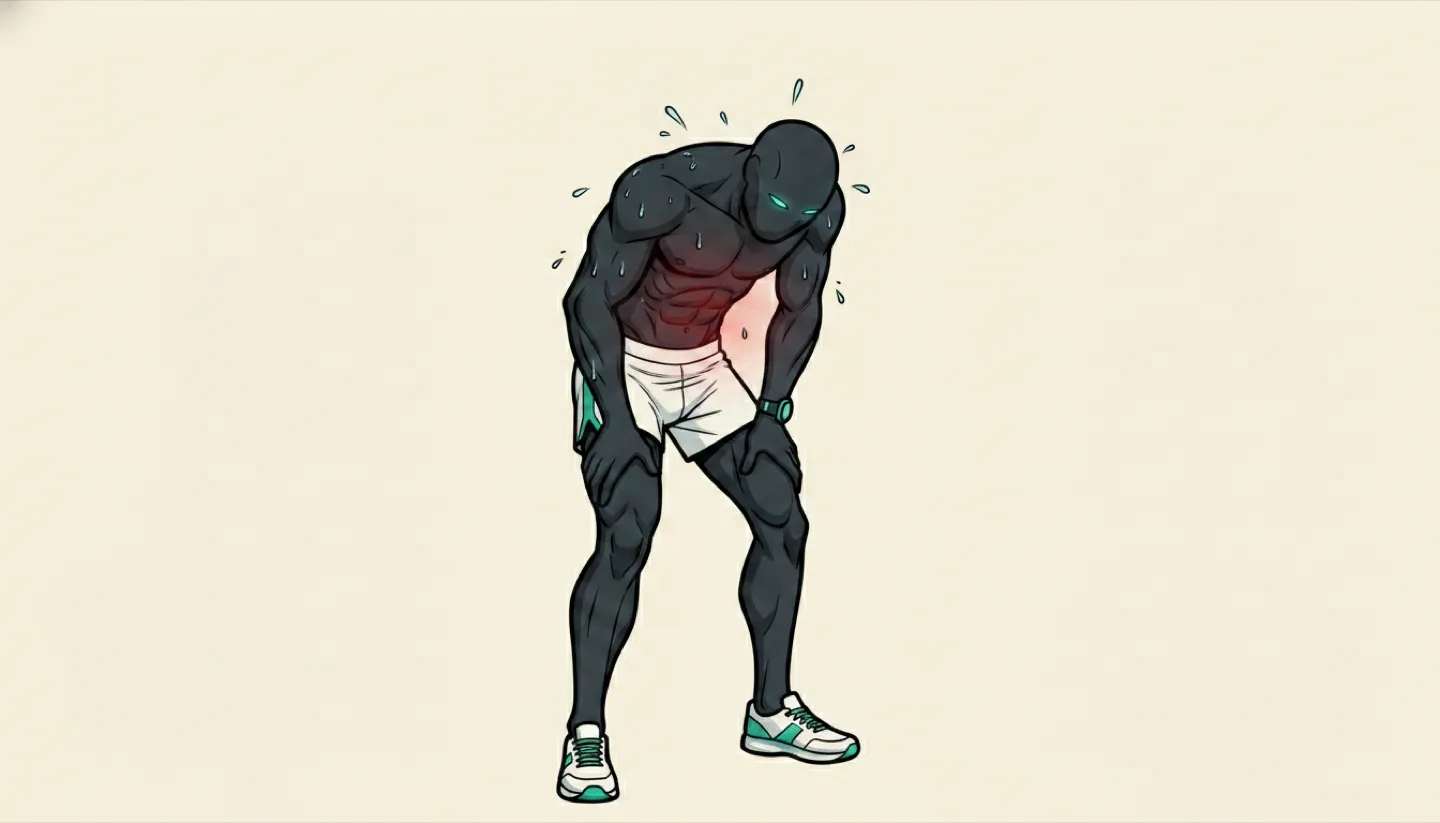
You can put 140 kilos on your back and grind out reps. Your arms fill the sleeves. People assume you're an athlete. And then you jog to the end of the street to catch a bus, and your lungs file for divorce. Hands on knees. Heart trying to escape your chest. Two hundred meters in and you're done. You're strong as hell, and somehow a sixty-year-old in running shoes just floated past you. Here's exactly why that happens, and how to fix it without losing the muscle you worked years for.
Strong, but no engine
Let's name the moment. You're powerful in the gym and useless the second the effort lasts longer than thirty seconds. It feels backwards. You're bigger, you're stronger, you should win, and you gas out first. It's not weakness. It's not bad genetics. It's a missing system. And once you see it, you can't unsee it.
The lie you've been told is that strength and fitness are the same thing. They're not even close. You can be the strongest guy in the room and have the engine of a smoker. Because muscle and cardio answer to two completely different signals.
Here's what's happening under the hood. Heavy lifting trains your body to produce massive force for a few seconds, then rest. That's the whole game: tension, then recovery. Your muscles got huge and powerful at exactly that. But running asks the opposite question. It doesn't want one big effort. It wants thousands of small ones, in a row, for minutes, without stopping. That runs on a different engine: your heart, your lungs, and tiny power plants inside the muscle called mitochondria. Lifting barely touches them. So you built a V8 of an upper body and bolted it to a lawnmower engine. The car looks fast. It can't go the distance.
And there's a part nobody says out loud: the bigger you are, the harder cardio is. More muscle is more weight to carry and more tissue demanding oxygen with every step. That's not a reason to stay out of shape. It's the reason you have to train the engine on purpose, because it will never show up by accident.
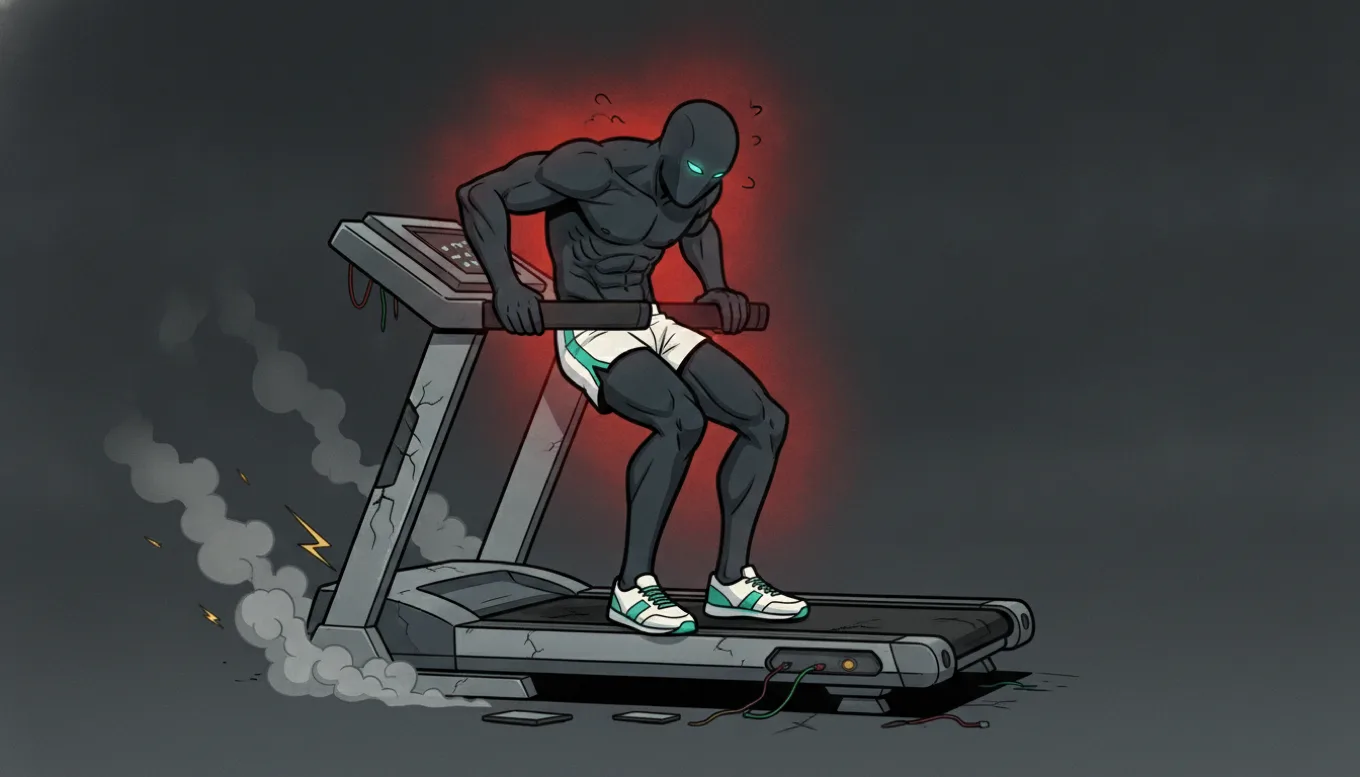
The system lifting never trains
But won't cardio kill my gains? That fear is exactly what keeps strong guys winded. It's the most overblown idea in the gym. And here's the kicker: a couple of easy runs a week will not shrink you. You don't lose muscle from a thirty-minute jog. You lose muscle from not eating enough and not lifting. Keep eating, keep lifting, add some easy cardio, and your muscle isn't going anywhere. What goes is the gasping.
And I need you to hear this, because most strong guys never do: a real engine makes you better in the gym, not worse. Better conditioning means you recover between sets faster. It means set five doesn't feel like a near-death experience. It means more quality volume, week after week. Cardio doesn't compete with your lifting. Past a point, it feeds it.
So here's the whole point. You don't have a strength problem. You have a missing half, the same missing half as the skinny runner, just flipped. He built the engine and forgot the chassis. You built the chassis and forgot the engine. The fix is the same word: hybrid. Keep the muscle, build the engine. Lift and run.
Full honesty, this one's personal, because I was this guy. I was never the skinny runner. I was the build. And I'd get winded jogging to the end of the street. When I said I wanted to run a marathon, everyone told me a guy my size would never pull it off. Too heavy. Too much muscle. Stick to lifting. So I forced myself into the uncomfortable half. The first runs were humbling. Strong as I was, I was a beginner all over again. But I kept the muscle, built the engine, and ran twenty-six point two in under four hours. If the guy everyone wrote off can build the engine, so can you.
How to build your base
Here's how you actually do it, and the rule is simple: start embarrassingly slow.
Most strong guys fail at cardio for one reason: ego. You go out and sprint because you're strong, you hit a wall in two minutes, you decide cardio isn't for you, and you quit. That's not cardio. That's a test you designed to fail. The engine isn't built at full speed. It's built slow.
So train mostly easy. The boring pace, the one where you could hold a conversation, where it feels almost too gentle. That zone two pace is where your body actually builds mitochondria and grows the heart. Two, maybe three easy sessions a week. Twenty to thirty minutes. Run, bike, row, ruck. The machine doesn't matter. The steady effort does.
Progress it like you progress a lift. Same principle, different number. Add a few minutes every week or two. Let the easy pace slowly get faster at the same effort. That's the engine growing, and it's the same dopamine as adding weight to the bar, once you learn to read it.
Strong and conditioned
And stack it smart. Don't run hard the day before legs, and don't crush legs two hours before a long run. Put easy cardio on upper-body days or rest days. Keep the two from stepping on each other and they start to feed each other. A bigger engine means better recovery, which means better lifts.
Now let me be honest about the limits, because everyone selling you a six-week shred is lying. This is not fast either. Your first few weeks of running will feel humiliating for a strong guy: slow, heavy, breathless. That's not failure. That's the engine being built from nothing. And if you go stupid, daily sprints, no recovery, slashing your food, yes, you'll lose a little size and feel wrecked. The game is enough, not maximum. Build the engine slowly, keep the weight on the bar, feed both.
So here's the truth. Gassing out at four hundred meters isn't your genetics, and it isn't a sign you're just a strength guy. It's a training choice. You trained one system and ignored the other. And a choice can be changed. Add two easy sessions a week, keep lifting, keep eating, and in a couple of months you stop being the strong guy who can't move and start being the one who's powerful and never out of breath. Strong and unstoppable.
Common questions
Why do strong guys gas out so fast when running?
Strong guys gas out because heavy lifting trains the body to produce huge force for a few seconds and then rest, while running needs thousands of small efforts in a row powered by the heart, lungs, and mitochondria that lifting barely touches. It's not weakness or genetics, it's a missing endurance system that was never trained.
Will doing cardio make me lose muscle?
A couple of easy runs a week will not shrink you, because you lose muscle from not eating enough and not lifting, not from a 30-minute jog. Keep eating, keep lifting, and add some easy cardio, and your muscle stays put while the gasping goes away.
How much cardio should a big muscular guy do without losing size?
Two, maybe three easy sessions a week of 20 to 30 minutes is enough to build the engine without losing size. The game is enough, not maximum, so avoid daily sprints, no recovery, and slashing your food, which is what actually costs you muscle.
What pace should I run to build endurance without burning out?
Run mostly at an easy zone two pace where you could hold a conversation and it feels almost too gentle, because that's where your body builds mitochondria and grows the heart. Most strong guys fail at cardio from ego, sprinting out, hitting a wall in two minutes, and quitting, so start embarrassingly slow.
Does cardio help or hurt your lifting?
Cardio feeds your lifting past a point, because better conditioning means you recover faster between sets and can do more quality volume week after week. A bigger engine means set five doesn't feel like a near-death experience.
Can a heavy muscular guy actually run a marathon?
Yes, a heavy muscular guy can run a marathon; the author was told a guy his size never would, but kept the muscle, built the engine, and ran 26.2 miles in under four hours. The fix is to train both systems, keeping the chassis while building the endurance engine.